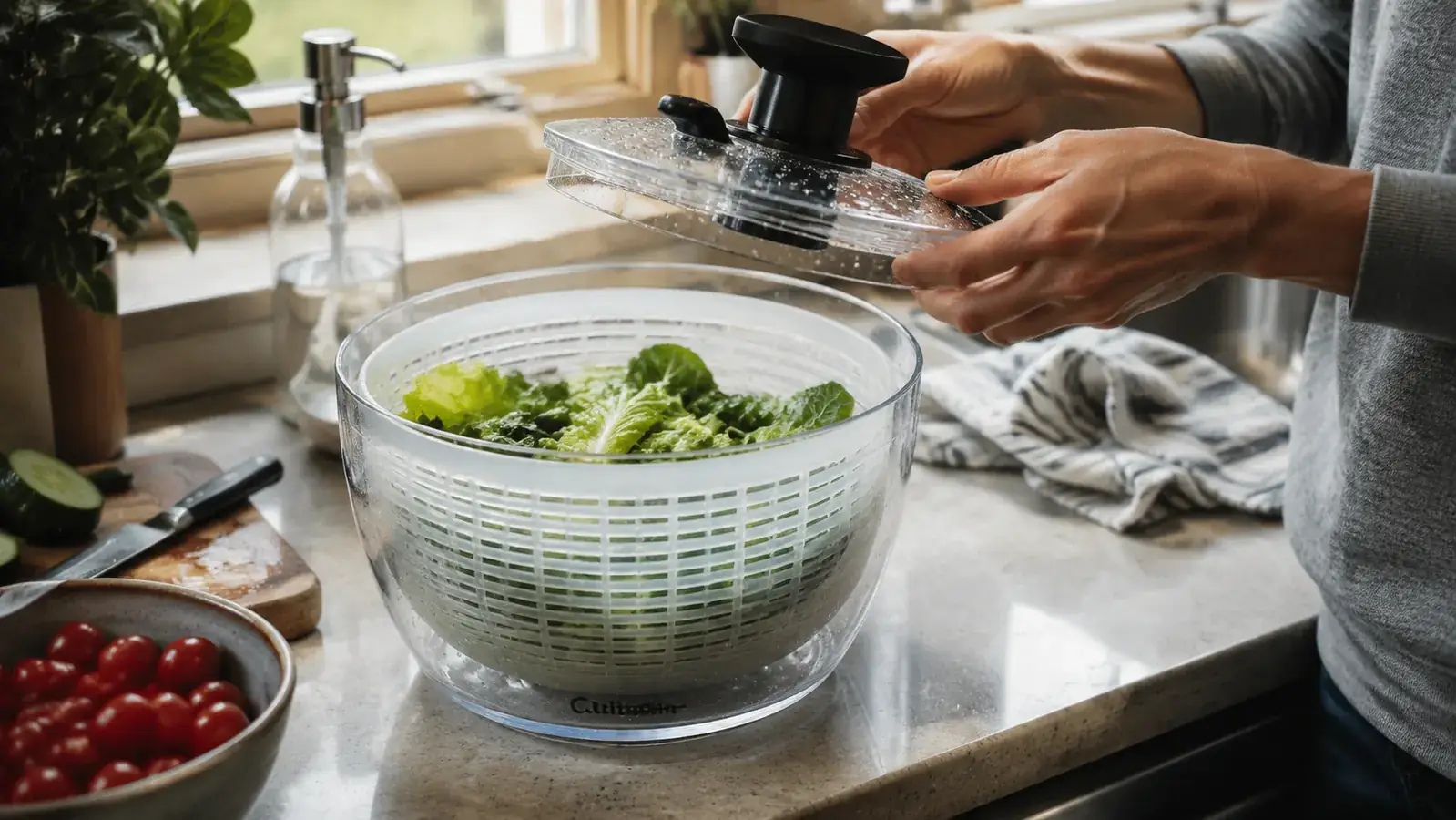
I bought the Cuisinart Salad Spinner in early March because I was sick of soggy salads and paper towels that shredded into my lettuce. I eat a big salad or a bowl of sauteed greens most weeknights, and I was tired of babysitting a colander over the sink, shaking it, then patting everything dry with towel after towel that still left half the water behind. Four months later, this 3-quart spinner has washed and dried greens for somewhere around eighty meals in my kitchen here in Providence, and it's still the first thing I reach for when a bag of kale or a head of romaine comes home from the store.
This isn't a first-week impression. I've run it through spinach, romaine, kale, herbs, and even sliced strawberries for a fruit salad, enough times to know where it earns its keep and where it doesn't. I bought it after two friends recommended it separately within the same month, which felt like enough of a signal to finally replace the flimsy plastic colander I'd been using since I moved into this apartment. Short version: it fixed a real annoyance in my routine, but it's a bulky bowl to find shelf space for and it's not magic on delicate greens.
The Quick Verdict
A genuinely effective way to get greens dry enough for dressing to actually stick, with a pump mechanism that's held up well and a bowl that earns double duty as a colander and a serving dish.
Amazon Check Today's Price →See why over 12,000 reviewers won't cook greens without one
Check today's price and current availability for the Cuisinart Salad Spinner on Amazon before you decide.
Amazon Check Today's Price on Amazon →How I've Used It
My testing has been ordinary weeknight cooking, not a lab setup. I wash romaine and butter lettuce for salads two or three nights a week, spin kale and spinach for sauteing on the other nights, and I've used it for fresh herbs like parsley and cilantro before chopping them for tacos or chimichurri. I also tried it once for sliced strawberries ahead of a fruit salad, mostly out of curiosity, and it worked fine as long as I went easy on the spin speed.
I fill the basket, run it under the tap in the sink, dump the water, refill, and repeat two or three times for anything with visible grit, like kale straight from a farmers market bunch. Then I lock the lid and pump the top handle in short bursts rather than one long pull, which I found gives more even drying without flinging leaves against the basket walls hard enough to bruise them.
One habit that changed my results early on: I stopped overfilling the basket. Cramming a full head of romaine in at once means the outer leaves dry and the center ones stay wet, because there's no room for the water to actually spin off. Washing in two smaller batches instead of one big one gave noticeably drier greens every time. I also started keeping the spinner right next to the sink instead of on its shelf above the fridge, which sounds minor, but it's the difference between me actually using it on a rushed Tuesday and reaching for the same old colander out of habit.
The Pump Mechanism, After Roughly Eighty Uses
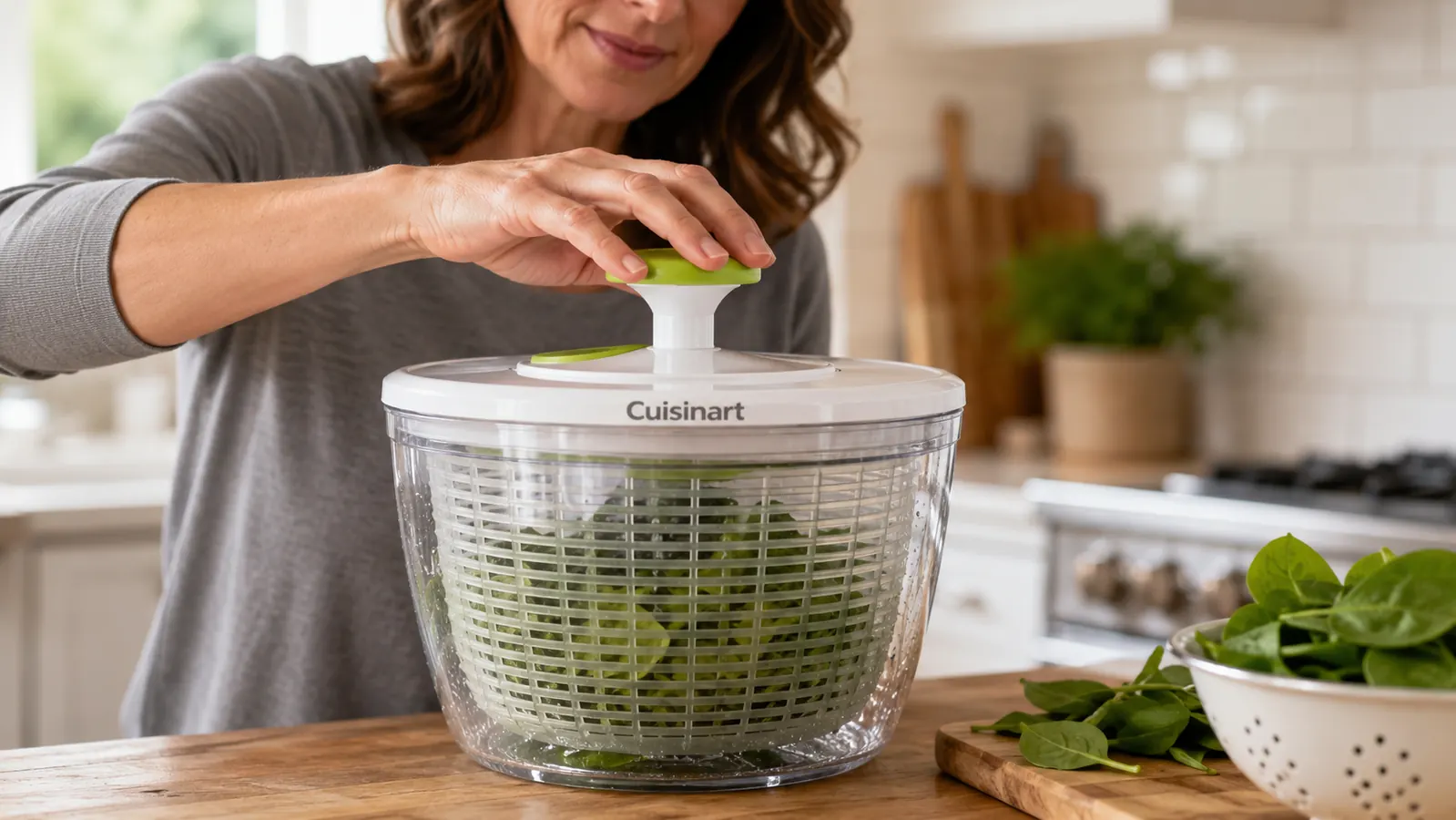
The spinner uses a pump-style top rather than a pull cord or a crank, and that was actually the deciding factor when I bought it over a couple of cheaper options I'd looked at first. You press the knob down in short strokes and the basket spins up fast, then coasts to a stop on its own once you let go. After four months of near-daily use, the pump still catches and releases the same way it did on day one, no grinding, no sticking, no need to jiggle it to get it going the way I remember an old cord-pull spinner doing at my mom's house growing up.
The brake button on top, which stops the spin instantly if you need to check on the greens mid-cycle, has held up too. I use it more than I expected, mostly to peek at whether spinach still has grit clinging to the leaves before I decide to run another rinse cycle. It's a small feature, but it's saved me from serving a gritty salad at least twice that I can remember.
The one thing I'd flag is that the pump requires a genuinely flat, stable surface to work well. On my slightly uneven countertop near the stove, the bowl can walk an inch or two during a hard pump if I'm not holding the base steady with my other hand. It's a minor adjustment, but worth knowing before you assume you can pump it one-handed while doing something else, like stirring a pot on the stove at the same time, which was my plan the first week I owned it.
Does It Actually Get Greens Dry
This was my main test, since a wet salad ruins a good vinaigrette by diluting it before it ever hits your plate. Romaine and iceberg come out close to towel-dry after two pump cycles, dry enough that dressing clings to the leaves instead of pooling at the bottom of the bowl. Spinach and other tender leaves need a gentler touch, since a hard spin can leave them slightly bruised at the edges, but even a shorter, softer spin gets them dry enough to saute without steaming instead of crisping in the pan.
Herbs are where I noticed the biggest upgrade over my old routine. Parsley and cilantro used to take me five or six paper towels and a lot of patience to dry enough that they wouldn't clump when chopped. One pump cycle in the spinner, and they come out loose and ready to chop within a minute. I've started doing this every Sunday when I prep herbs for the week ahead, storing them in a container lined with a single paper towel afterward, which keeps them fresh for close to a week instead of wilting by Wednesday.
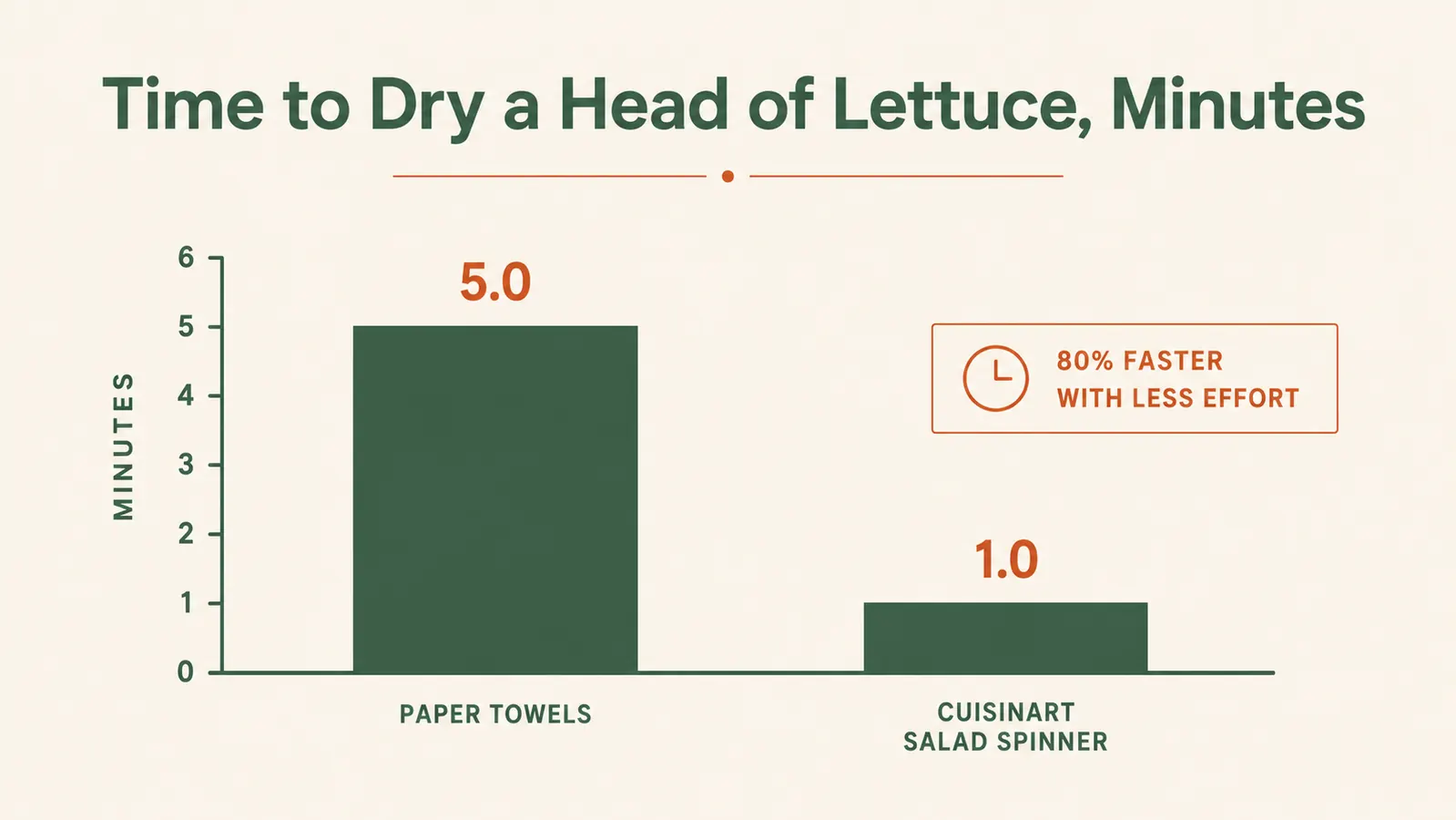
I timed a head of romaine start to finish, washed, spun, and ready to chop: about ninety seconds. My old paper towel routine for the same head of lettuce ran closer to four minutes, plus I was going through four or five paper towels I don't have to buy anymore. Over four months, that adds up to a genuinely noticeable drop in how much of a chore weeknight salad prep feels like.
Cleanup and Everyday Maintenance
Cleanup is where I expected a multi-part gadget like this to lose me, since the basket, bowl, and pump lid are three separate pieces to keep track of. In practice it's been simple. The basket and bowl are dishwasher safe and I run them through the top rack most weeks, though I've hand-washed both plenty of times when I'm doing a quick rinse between two batches of greens in the same evening.
The pump lid itself I always hand-wash, since I'd rather not risk water getting into the mechanism through repeated dishwasher cycles, even though nothing in the instructions warned me against it. That's just a habit I picked up early on and stuck with, and four months in, the pump still works exactly as smoothly as it did the first week.
The only real annoyance is bits of chopped herb or torn kale getting stuck in the corners of the basket's mesh. A regular sponge doesn't always reach those spots, so I keep a cheap bottle brush next to the sink specifically for scrubbing the basket, and that's solved the problem completely.
Storage and Counter Space
This is the tradeoff nobody mentions in the marketing photos. The bowl is a genuine 3-quart size, which is exactly what makes it good at washing a full head of lettuce, but it's also a real commitment of cabinet space. In my one-bedroom kitchen, it lives on a shelf above my fridge because it doesn't nest well with anything else I own. If your cabinets are already tight, measure before you buy, because this isn't a gadget you can tuck into a drawer.
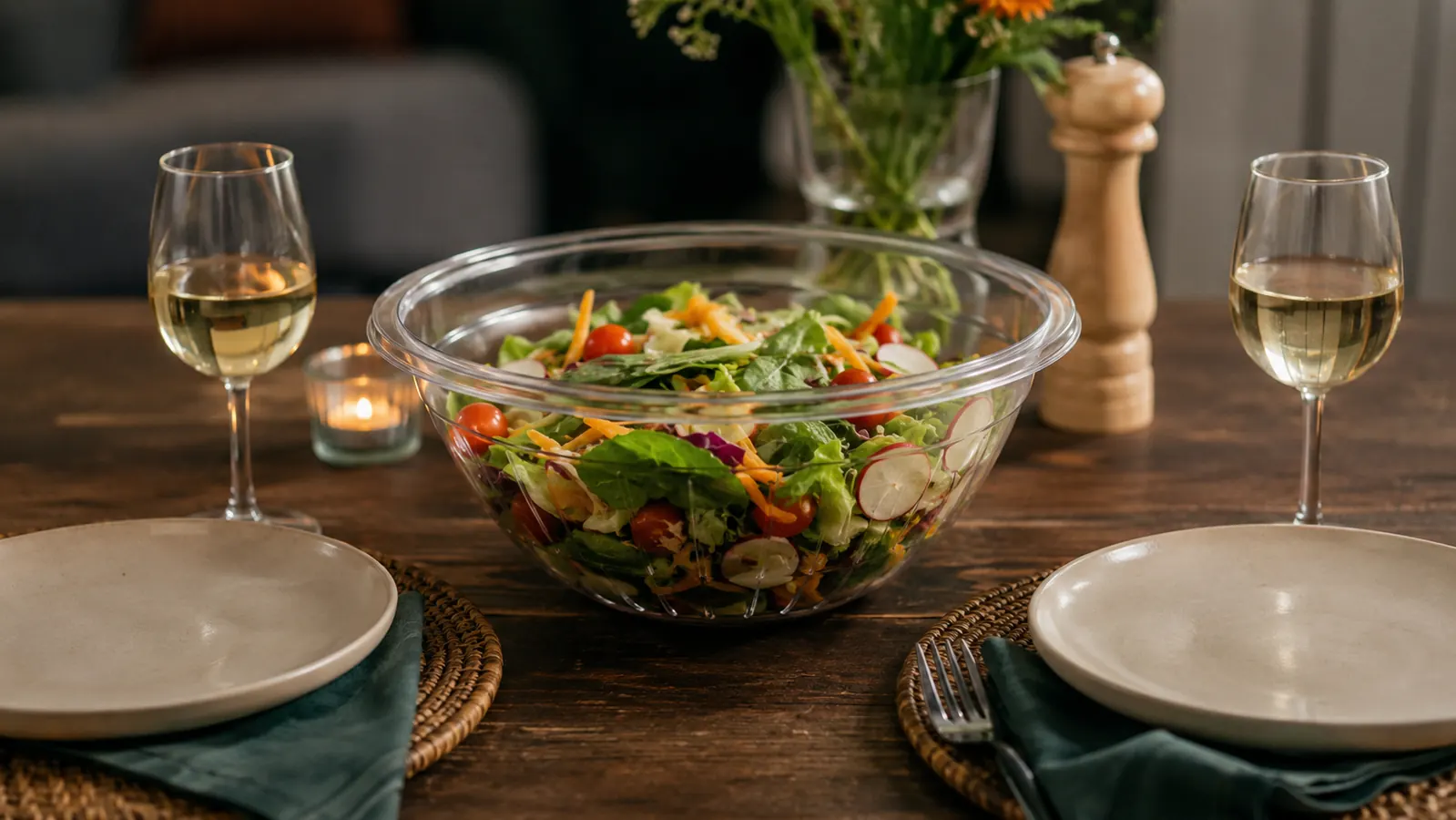
I did find a workaround that made the size worth it. The clear outer bowl, with the spinner basket lifted out, doubles as a legitimate serving bowl for tossed salads. I've used it at two dinner parties now instead of dirtying a separate serving dish, which softened my feelings about the shelf space it takes up. It's not going to replace a nice ceramic bowl for a formal dinner, but for a casual weeknight or a backyard cookout, it's one less dish to wash.
Durability Check, Four Months In
The plastic bowl and basket show zero cracking despite going through the dishwasher's top rack more times than I've bothered to count, plus daily hand-washing on the weeks I was running it through greens every single night. The basket's mesh holes haven't warped or torn, even after scrubbing out stuck-on bits of chopped herb with a bottle brush. The lid's rubber gasket, which is usually the first thing to wear out on gadgets like this, still seals tightly enough that I don't get water leaking out the sides during a hard spin.
The only cosmetic wear is a slight cloudiness starting to show on the clear bowl, which I think comes from repeated dishwasher cycles rather than anything I did wrong. It hasn't affected function at all, it's purely visual, and it's the kind of thing I'd expect from any clear plastic kitchenware after this much use. I'll keep watching the gasket over the next few months since that's usually the part that goes first on anything with a locking lid, but so far it shows no signs of losing its seal.
Who I've Talked Into Buying One
My neighbor Priya, who cooks for a family of four and goes through way more greens than I do solo, borrowed mine for a week in May and bought her own almost immediately after realizing how much faster her salad prep went on busy weeknights. My cousin Marcus, who mostly eats out but was trying to cook more at home, was skeptical about yet another bulky kitchen item until he saw how it made washing herbs for his weekend cooking experiments actually manageable instead of a soggy chore. Both of them mentioned the same thing I noticed first, that it's not the washing that's hard, it's the drying, and this is the first tool either of us has owned that actually solves that part.
What I Liked
- Cuts time drying lettuce and herbs by more than half compared to paper towels
- Pump mechanism has held up through roughly eighty uses with no sticking or grinding
- Doubles as a serving bowl once the basket is removed
- Dishwasher-safe parts have shown no cracking or gasket failure so far
Where It Falls Short
- 3-quart bowl takes up real cabinet or shelf space
- Tender greens like spinach need a gentler, shorter spin to avoid bruised edges
- Needs a flat, stable counter surface, can walk during a hard pump on uneven surfaces
- Clear bowl shows some cloudiness after months of dishwasher cycles
It's not that washing lettuce was ever hard. It's that I stopped doing it four nights a week when it took four paper towels and a shrug.
Who This Is For
If you eat salads or cook leafy greens more than a couple times a week and you're tired of paper towels or a shaking colander over the sink, this earns its space. It's also a solid pick if you cook fresh herbs often, since the difference in drying time and effort there is the biggest upgrade I noticed, and if you host casual dinners where the bowl-as-serving-dish trick can save you a step.
Who Should Skip It
If your kitchen storage is already maxed out and you only make a salad occasionally, the size of this thing may not be worth the commitment. And if you almost exclusively cook heartier vegetables that don't need drying, like potatoes or squash, you won't get much use out of it beyond the occasional bag of spinach.
Ready to stop shredding paper towels over your salad bowl?
See current pricing and availability for the Cuisinart Salad Spinner on Amazon.
Amazon Check Today's Price on Amazon →