
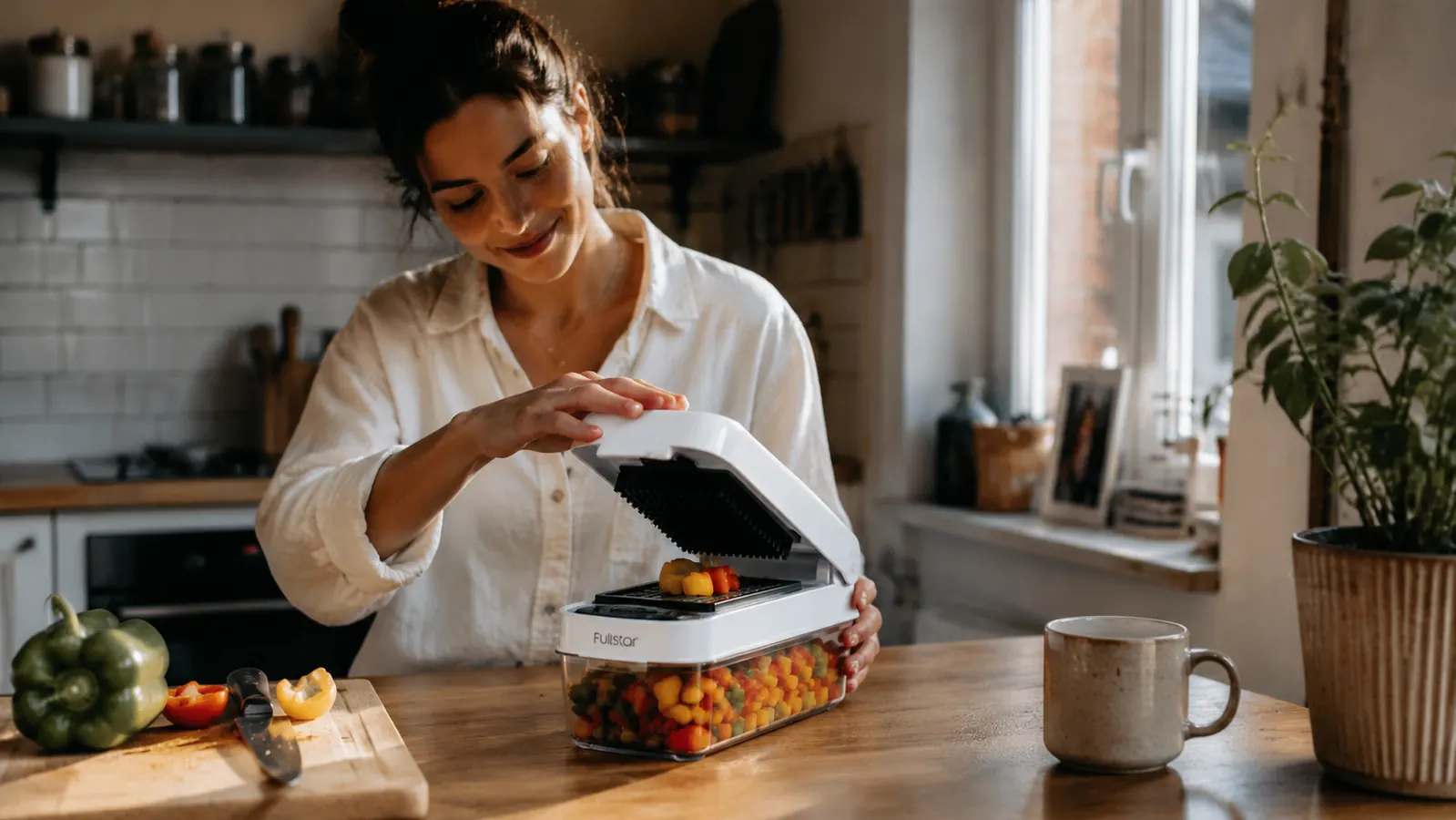
I bought the Fullstar Vegetable Chopper in early March because I was tired of my own excuses. I'd tell myself I'd meal prep every Sunday, then spend forty minutes dicing onions and bell peppers for a batch of chili and give up on the rest of the week's vegetables halfway through. Four months later, this thing has diced its way through roughly ninety meals in my one-bedroom kitchen in Providence, and I still reach for it three or four times a week without thinking twice.
This isn't a first-impressions post. I've owned it long enough to know which blade inserts I actually use, which one is basically decorative, and whether the plastic housing holds up to a dishwasher's top rack after a hundred-plus runs. Short version: it earned its drawer space, but it's not without quirks, and I want to walk through all of them, not just the flattering ones.
The Quick Verdict
A genuinely useful prep shortcut for onions, potatoes, and firmer vegetables, with a learning curve on pressure and a blade set that's more good-to-have than essential.
Amazon Check Today's Price →See why 128,000+ reviewers keep this in daily rotation
Check today's price and current availability on Amazon before you decide.
Amazon Check Today's Price on Amazon →How I've Used It
My testing wasn't a lab setup. It was real weeknight cooking for one person plus whatever I brought to my sister's house on Sundays. I used the chopper for onions in soffritto, diced potatoes for home fries, bell peppers and celery for stir-fries, and cucumbers for a summer salad rotation I've been on since June. I did not use it for anything soft like tomatoes or mango, because I learned early that soft produce turns to mush under the blade grid instead of holding a clean cut.
I also ran it through roughly fifteen dishwasher cycles on the top rack to see how the plastic held up to heat over time, and hand-washed it the rest of the time since the blade inserts dry faster and stay sharper-feeling when you towel them off right away instead of letting them air dry in a rack.
One habit that changed my results early on: I stopped trying to force whole vegetables through in one press. Cutting a potato into quarters first, then chopping each quarter, gave cleaner, more even pieces than trying to muscle a whole potato through the grid. It also cut down on the amount of force I had to put through my palm, which matters if you've got any wrist strain from typing all day like I do.
By week three I'd worked out a rough routine. Sunday mornings, I'd pull out the container, the medium blade, and whatever vegetables I was cooking for the week, and get through an onion, two bell peppers, and a couple of potatoes in under ten minutes total, including rinsing the blade between vegetables so flavors didn't bleed into each other.
I've owned my share of single-use kitchen gadgets that got tried twice and shoved to the back of a cabinet, so I went into this one skeptical. What kept it out of that drawer of regret is that it replaced an actual daily habit rather than adding a new one, which is the bar I hold every gadget to before it gets counter or cabinet space in a kitchen this size.
The Blade Inserts, Ranked by How Often I Actually Reach for Them
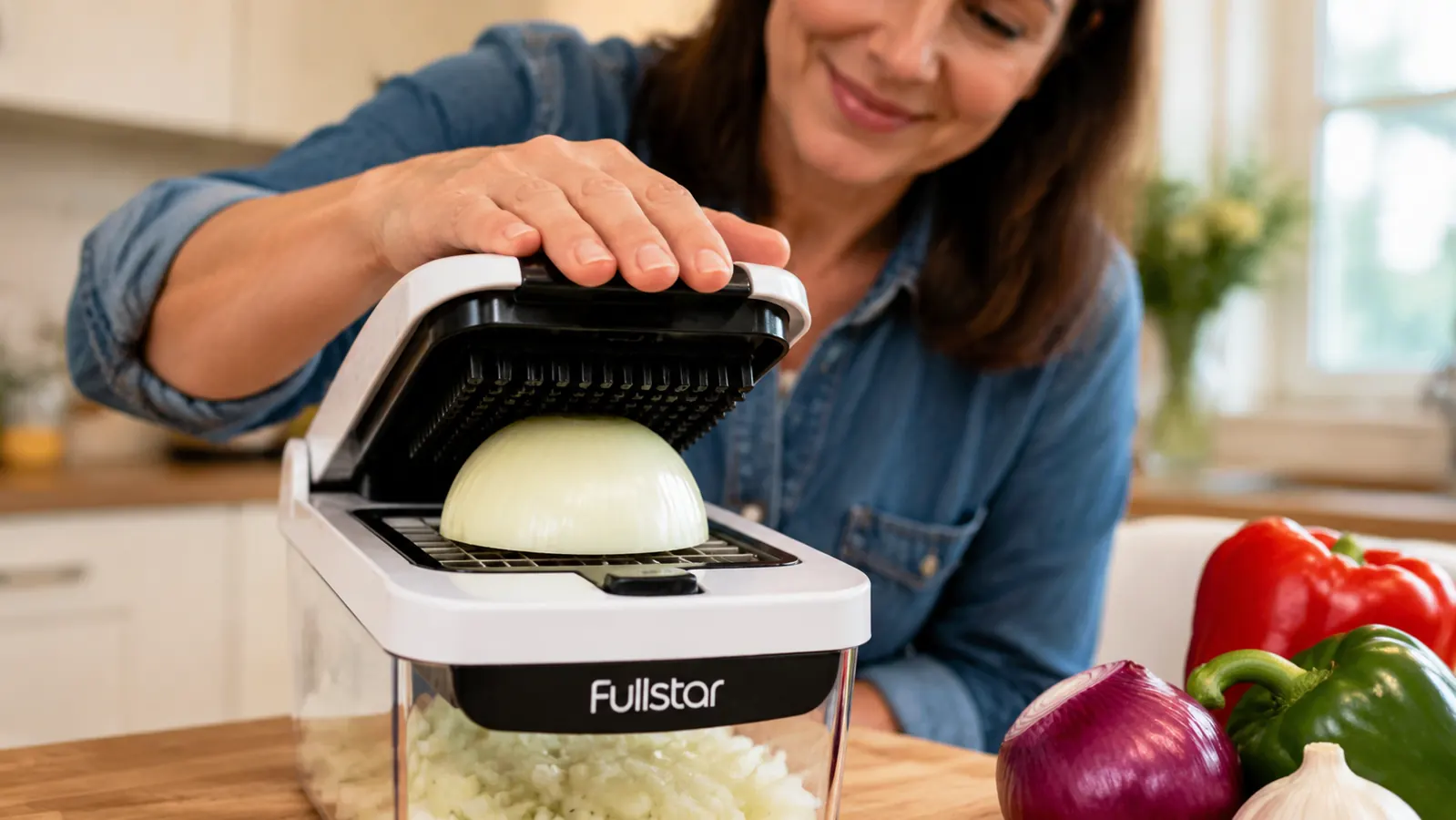
The set comes with multiple interchangeable blade inserts for different cut sizes, plus a julienne option. In four months, I've used the medium dice blade probably 70 percent of the time. It's the one that handles onions, bell peppers, and celery without turning anything to paste, and it's the one I grab on autopilot now without even checking the labels on the storage case.
The julienne blade gets used maybe once every two weeks, usually for carrots when I'm making a quick slaw. It works, but it needs firmer vegetables and a bit more downward force than I expected the first time I tried it, which surprised me since the marketing photos make it look effortless. I've also tried it on zucchini and gotten mixed results, some strips clean and some mangled, depending on how fresh the zucchini was.
The finer dice insert is the one I've used least. It's genuinely good for small dice work like a mirepoix base, but I found myself defaulting to a knife for that specific job because I only need a small quantity and setup plus cleanup for the chopper doesn't pay off for a half cup of diced carrot. If I'm making a big pot of soup for the week, though, that calculation flips and the fine blade earns its keep.
There's also a spiralizer attachment that came in the box, which I'll admit I used exactly twice, both times for zucchini noodles during a low-carb kick in April that didn't stick. It works fine, but it's not part of my regular rotation and I wouldn't buy this product for that attachment alone.
If I'm being honest about storage, the full blade set plus container takes up more drawer space than I initially budgeted for, so I ended up giving away an old set of measuring cups I rarely used to make room. That's a real tradeoff worth knowing about if your kitchen drawers are already packed tight.
Cleanup After Ninety-Plus Uses
This is where I expected the chopper to lose me. Multi-part gadgets with blade grids are notorious for turning cleanup into a bigger job than the knife would've been. That hasn't been my experience, mostly because I clean it immediately after use rather than letting onion residue dry onto the blades and harden into something that needs soaking to remove.
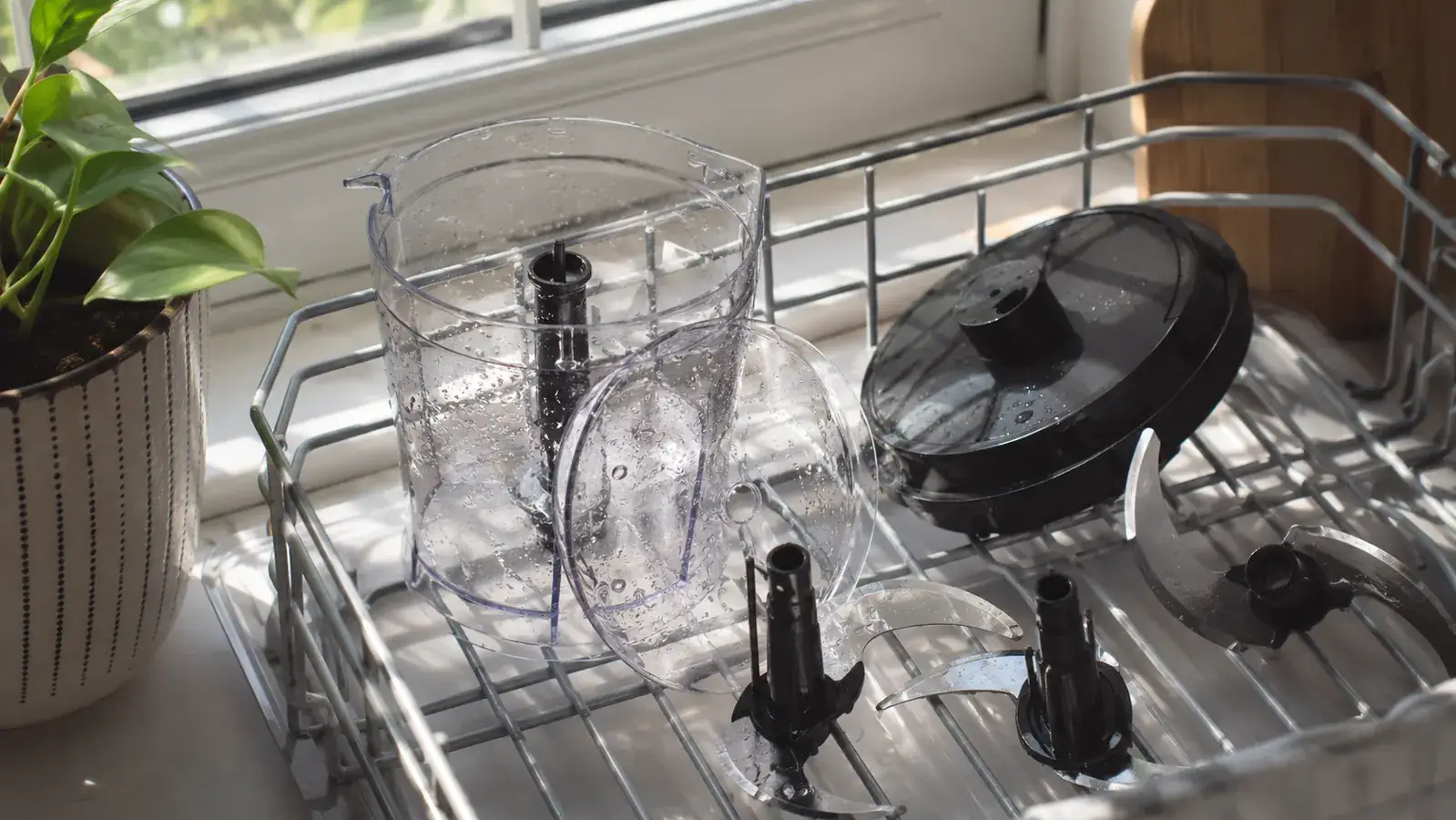
The container and lid are dishwasher safe and I've run them through the top rack more than a dozen times with no warping or clouding that I've noticed. The blade inserts I hand-wash under running water with a stiff-bristled bottle brush, because food particles can lodge in the grid corners and a regular sponge doesn't always reach them cleanly.
The one real annoyance: if I let diced onion sit in the container for more than an hour before transferring it to a bowl, the plastic picks up a faint onion smell that takes a baking soda soak to fully clear. I now transfer chopped vegetables out within twenty minutes of prepping, which solved the problem entirely and has become second nature at this point.
I've also started keeping a small designated dish towel just for drying the blade grid, since regular kitchen towels tend to snag on the metal edges. It's a minor workaround, but worth mentioning if you're someone who irons out every friction point in a routine the way I do.
Where It Genuinely Saves Time
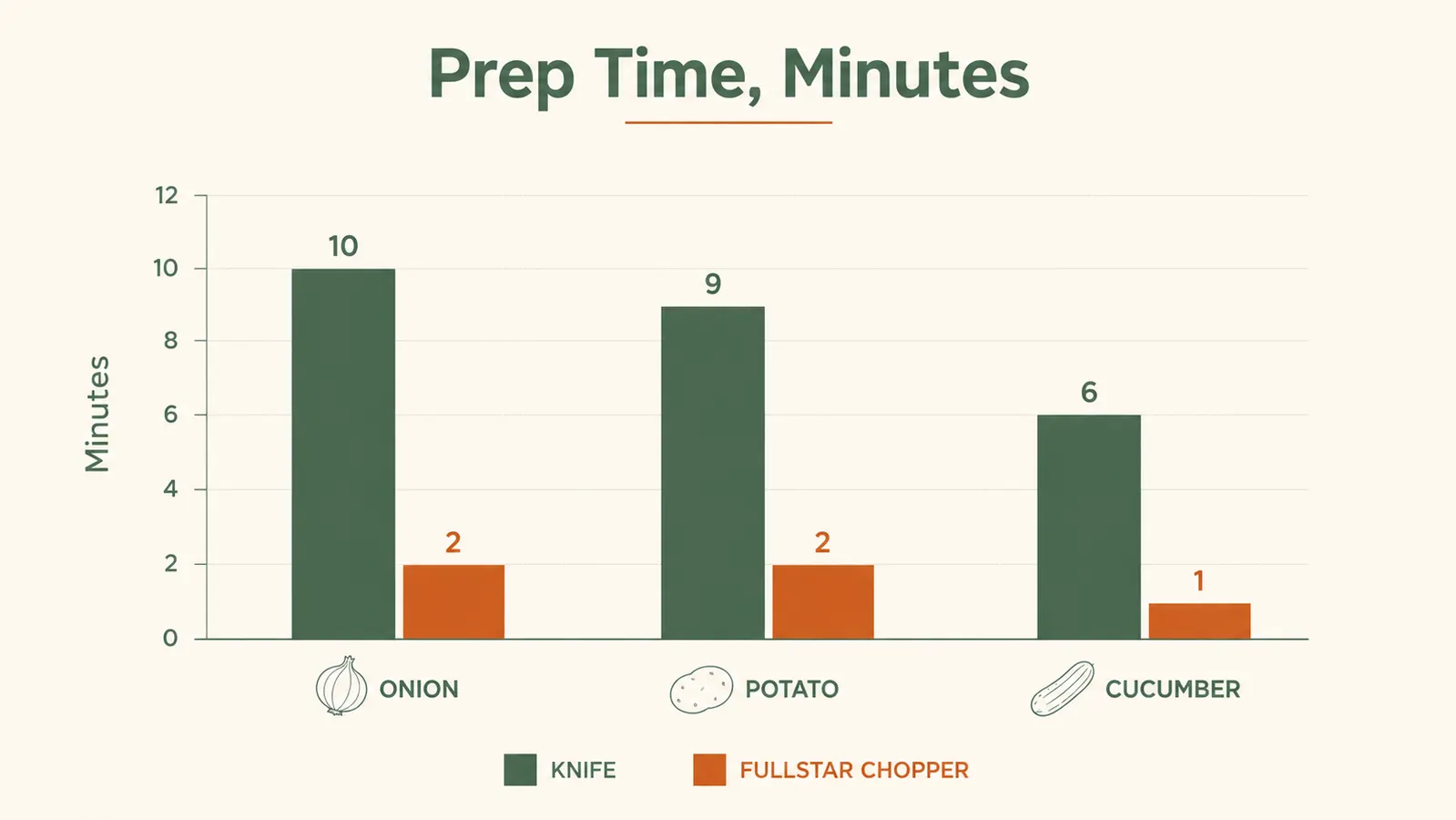
I timed myself dicing one yellow onion with a knife on a cutting board: just over three minutes, including wiping down the board afterward. The same onion through the Fullstar chopper's medium blade, from unpeeled to diced in the container, took about ninety seconds including setup. That gap gets bigger on a night when I'm dicing three onions for a big batch of soup, because the knife time scales linearly and the chopper time barely moves once you're in a rhythm.
Where it does not save meaningful time is small jobs. Dicing a single stalk of celery is faster with a knife, full stop, since pulling out the chopper, fitting the blade, and rinsing it afterward takes longer than three quick knife strokes. The chopper's advantage shows up in volume, not in single-ingredient speed, and I've stopped reaching for it on nights when I only need a small handful of something.
Over four months, the time savings have added up in a way I didn't expect when I first bought it. On a typical Sunday prep session covering four or five days of dinners, I'm saving somewhere around fifteen to twenty minutes compared to doing the same volume by hand, which is enough that I actually look forward to prep day now instead of dreading it.
Durability Check, Four Months In
The blade edges are still sharp enough to cut cleanly through a raw potato without me pressing noticeably harder than I did in March. I was fully expecting some dulling by now given how many times I've run it, since I use it more than most kitchen tools I own, including my actual chef's knife some weeks.
The plastic housing on the lid has a small hairline scuff from where I dropped it once on my tile floor, but it didn't crack and the mechanism still locks and releases the same way it did on day one. I was genuinely bracing for a crack when it hit the floor, given how loud the sound was, so that held up better than I expected.
The one part I keep an eye on is the rubber seal around the container lid. It's still intact, but I can see it's starting to lose a bit of its snap when I press it closed, which makes me think it might need replacing before the blades ever do. I've noted it on my calendar to check again around the six-month mark.
Alternatives I Considered Before Buying
Before landing on the Fullstar, I looked at a couple of cheaper single-blade choppers at a local kitchen supply store, and a pricier food processor attachment that would've done more but taken up counter space I genuinely don't have in a one-bedroom apartment. The single-blade choppers were fine for onions but couldn't switch cut sizes, which mattered to me since I dice potatoes bigger than onions for home fries.
The food processor attachment would have handled larger batches faster, but it needed to live out on the counter to be worth using, and my kitchen just doesn't have the real estate. The Fullstar's container tucks into a cabinet drawer between uses, which ended up being the deciding factor more than raw performance.
I also asked around in a local cooking forum I'm part of before buying, and the recurring complaint about competing choppers was blades dulling within a month or two of regular use. That feedback is part of why I've been tracking blade sharpness so closely throughout this review instead of just assuming it would hold up.
Who I've Talked Into Buying One
My neighbor Priya borrowed mine for a dinner party in May and bought her own a week later after she saw how fast she got through a bag of onions for a big batch of dal. My cousin Marcus, who cooks for himself most nights and hates doing dishes, was skeptical about another gadget cluttering his counter until he realized it replaces the cutting board wipe-down entirely for onion and pepper prep.
My mom, who has arthritis in her hands and has slowly given up on recipes that need a lot of chopping, tried mine over a visit in June and asked me to help her order one before she left. Watching her get through a bag of potatoes without wincing was honestly the moment that sold me hardest on recommending this to people beyond just the time-savings angle.
What I Liked
- Cuts onion and bell pepper prep time by more than half for batch cooking
- Container catches diced vegetables directly, fewer dishes overall
- Blade inserts have held their edge through months of near-daily use
- Dishwasher-safe container and lid make cleanup manageable
- Reduces hand and wrist strain compared to repetitive knife work
Where It Falls Short
- Struggles with soft produce like tomatoes and ripe mango, turns to mush
- Julienne blade needs more downward force than expected
- Container lid seal is starting to show wear at the four-month mark
- Not faster than a knife for single-ingredient, small-quantity jobs
- Full blade set takes up more drawer space than expected
It's not magic. It's just faster than me with a knife when I'm dicing three onions instead of one.
Who This Is For
If you meal prep on a set day and regularly dice onions, peppers, celery, or potatoes in volume, this earns its space. It's also a solid pick if you cook for a family and find yourself doing repetitive knife work most nights, since the time savings compound the more you use it, and it's a good option for anyone dealing with wrist or hand strain who wants less repetitive knife pressure.
Who Should Skip It
If your cooking leans heavily on soft produce like tomatoes, avocado, or ripe fruit, this isn't going to replace your knife, it'll just make a wet mess. And if you cook small portions for one and rarely dice more than a single vegetable at a time, the setup and cleanup time may cancel out any speed gain, so a good knife might genuinely serve you better.
Ready to cut your prep time down, not your patience?
See current pricing and availability for the Fullstar Vegetable Chopper on Amazon.
Amazon Check Today's Price on Amazon →