
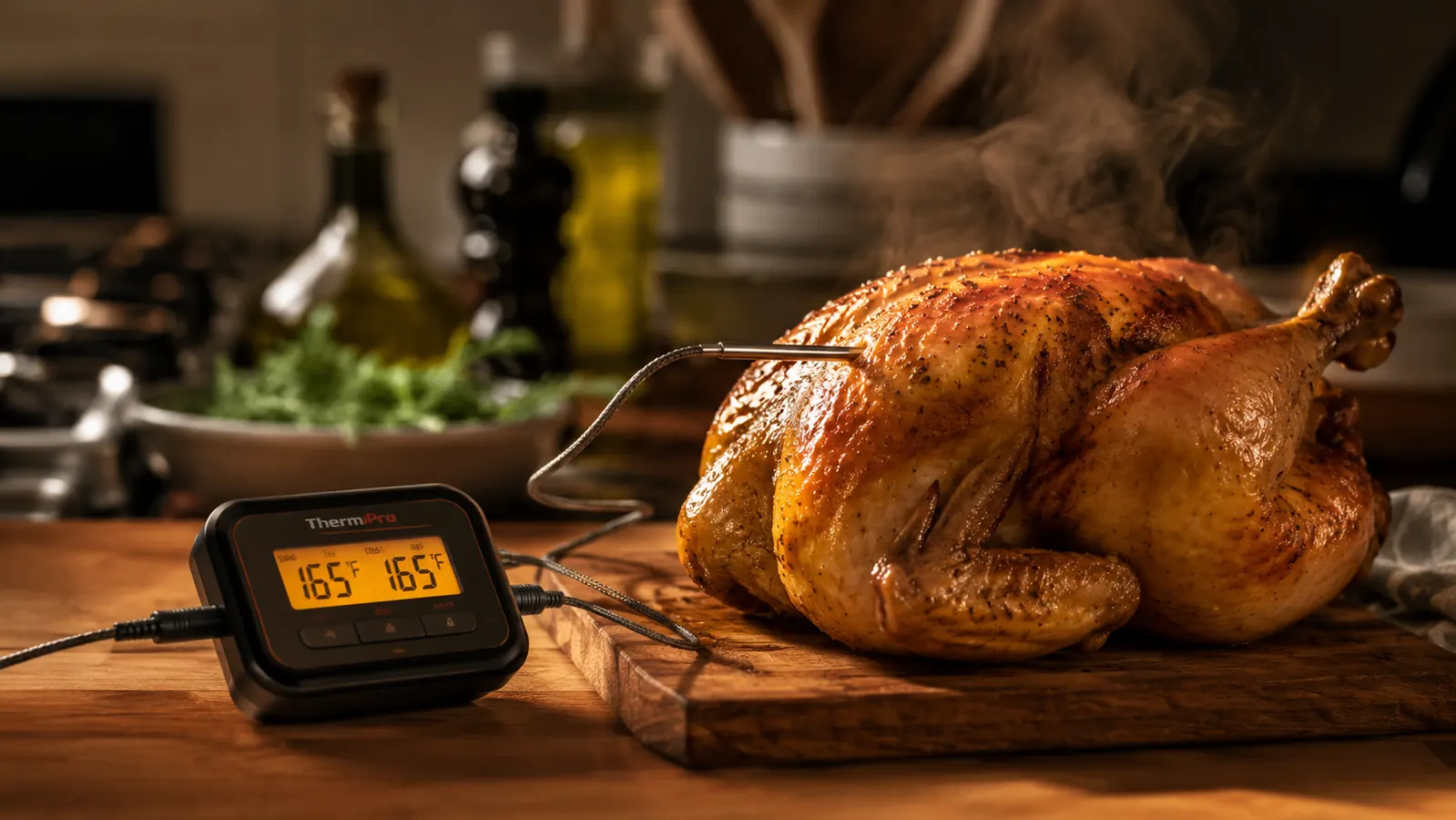
The first time I pulled a chicken breast off the stove convinced it was done, cut into it, and watched pink juice pool on the cutting board, I decided I was done guessing. That was three years ago. It took me embarrassingly long to actually buy a real thermometer, and even longer to land on one that didn't feel like a toy. The TempPro TP17 dual probe digital thermometer has been in my kitchen and on my little patio grill for six months now, through roast chickens, a few pork shoulders, more chicken thighs than I can count, and one very stressful Thanksgiving turkey I did not want to mess up.
I'm Dana. I test kitchen gadgets in a normal-sized city kitchen with limited counter and drawer space, so I'm not precious about brand names or specs, I care about whether a tool earns its spot. The TempPro TP17 earned its spot fast. It's not flashy. It's a wired dual probe unit with a big backlit display, a cable long enough to run from the grill to my kitchen table, and a price that didn't make me flinch. Here's what six months of actual use taught me, including the parts that still bug me.
The Quick Verdict
A reliable, no-fuss dual probe thermometer that reads accurately, survives real outdoor use, and costs less than most single-probe competitors. The app-free simplicity is the whole appeal, and also its one real limitation.
Amazon Check Today's Price →Stop cutting into meat to guess if it's done
The TempPro TP17 tells you the second your chicken, roast, or steak hits temperature, no cutting, no guessing, no dry meat. Check today's price on Amazon before your next cookout.
Amazon Check Today's Price on Amazon →How I've Used It
My setup is unglamorous. I've got a small two-burner gas grill on my patio and a standard oven inside, and I split time between the two depending on the season. When I bought the TempPro TP17 last winter, my plan was simple: use it for every single piece of meat that goes into my oven or onto that grill for at least six months, no exceptions, and see if it actually changed how our dinners turned out.
It did, almost immediately. The first week I used it on a whole roast chicken, running one probe in the thickest part of the breast and the other in the thigh, since dark and white meat finish at different rates and I'd been ignoring that for years. Watching both numbers climb on the display while I sat at the table instead of hovering over the oven door was the first sign this thing was going to change my habits, not just sit in a drawer.
Since then it's been in constant rotation. Weeknight chicken thighs, a pork tenderloin for a dinner with my neighbor Priya, a spatchcocked turkey for Thanksgiving, burgers on the grill when I wanted to hit exactly medium instead of the usual coin flip. I'd guess I've used it somewhere north of ninety times since February, which is more than I've used most gadgets in my kitchen combined.
It also changed a habit I didn't expect it to touch: how early I start cooking. Before, I built in a buffer of extra time because I never trusted my own read on doneness, so dinner often sat resting far longer than it needed to. Now I know almost exactly how long a two-pound chicken breast batch or a three-pound pork tenderloin takes to hit temperature in my specific oven, because I've logged it in my head over dozens of repeats, and that's shaved a real chunk of time off weeknight cooking.
Two Probes, Two Jobs: How the TP17 Actually Works
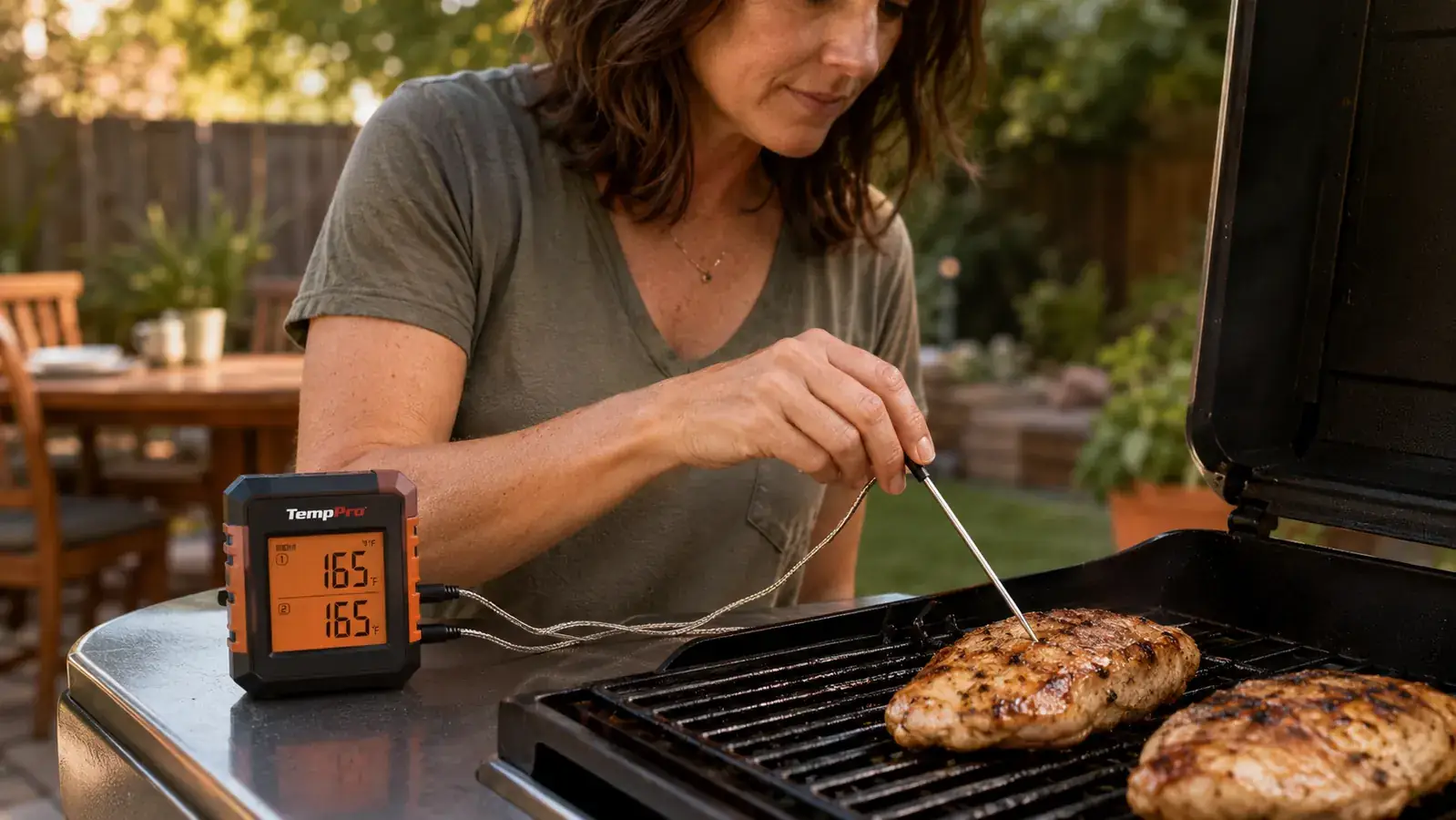
The whole appeal of a dual probe setup is that you can monitor two things at once, and in practice that turns out to matter more than I expected. On a whole chicken, I run one probe in the breast and one in the thigh, and I set the high alarm on the breast for 165 and let the thigh run a little hotter since dark meat is more forgiving. On a pork shoulder or brisket-adjacent cook, I use the second probe as an ambient reading near the meat if my grill doesn't have a built-in gauge I trust, which mine doesn't.
The probes themselves are thin, stainless steel, and rated for both oven and grill use, with heat-resistant cable sleeves that have survived direct grill heat without melting or discoloring, which is more than I can say for a cheaper single probe unit I used briefly two summers ago. The display is large, backlit in blue, and easy to read in direct sun or in a dark backyard at 9pm, which matters more than it sounds like it would when you're squinting at a screen with tongs in your other hand.
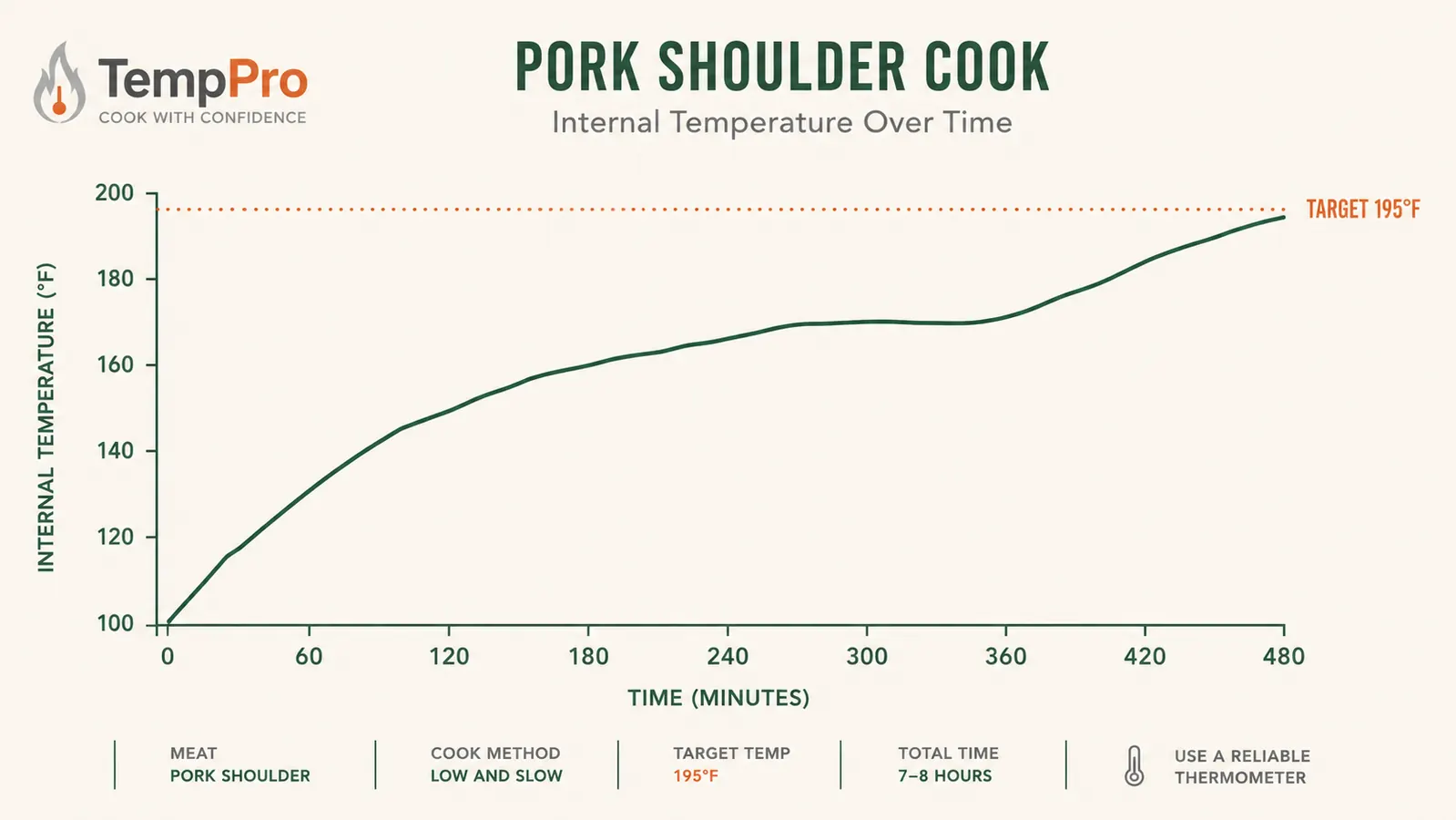
Setup is refreshingly dumb in the best way. There's a preset list of meats and doneness levels (poultry, beef, pork, and a few others) so you can just select "poultry" and let it set the target for you, or you can punch in your own number if you've got a specific target like 195 for pulled pork. There's also a timer function I use more than I expected, mostly for resting time after the meat comes off heat.
One small detail I've come to appreciate: the buttons have real, physical tactility, so I can adjust a target temperature or switch modes by feel, without needing my glasses or good lighting. That sounds minor until you're standing at a grill at dusk trying to bump a target up five degrees and you don't want to squint at a touchscreen that isn't responding to greasy fingers.
Six Months of Steaks, Chicken, and Sunday Roasts
The real test of any kitchen tool isn't week one, it's month four, when the novelty's worn off and you either keep reaching for it or you don't. By April I noticed I'd stopped even thinking about whether I'd hit the right temperature. I just trusted the number. That's the actual payoff of owning something like this: it removes a decision you used to make with your gut and replaces it with a fact.
Accuracy has held up consistently. I checked it a few times against an instant-read probe thermometer I already owned, dunking both in a glass of ice water (should read 32F) and then a pot of boiling water (should read 212F at sea level, adjust for altitude), and the TP17 landed within a degree both times, which is well within the range I'd expect from a home kitchen tool. Across six months of real cooks, I never once had a reading that turned out to be meaningfully wrong when I double-checked with a separate probe.
The alarm function is the feature I use the most and value the most. You set a target temperature, the unit beeps loudly when the meat hits it, and you're not stuck babysitting the oven or grill the whole time. On the Thanksgiving turkey, that alarm meant I could actually sit with my family for twenty minutes instead of opening the oven every ten minutes like I used to. My mother, who has cooked a turkey every year for thirty years by instinct alone, was skeptical right up until the alarm went off within a couple minutes of when she guessed it'd be ready. She hasn't said anything since, but she also hasn't stopped me from bringing the TempPro thermometer to her house the last two holidays.
Where the Probes and Cable Held Up (and Where They Didn't)
Six months of near-weekly use is enough to find the weak points, and there are a couple. The probe cables are flexible and heat-rated, but the connection point where the cable meets the probe handle has started to feel slightly less snug than it did on day one. It still works fine, but I'm gentler with it now than I was in month one, coiling the cables loosely instead of wrapping them tight around the base unit.
The base unit itself, the part with the display and buttons, has held up without complaint. It's not waterproof, so I keep it away from direct spray when I'm hosing off the grill grates, and I wipe it down rather than submerging it, which is just common sense with any wired electronic probe thermometer. The battery compartment is a standard AAA setup and I've replaced batteries once in six months of heavy use, which felt reasonable.
One thing worth naming honestly: this is a wired unit, not a wireless or Bluetooth model. That's exactly what I wanted, since I don't love relying on an app for something as basic as checking meat temperature, but it does mean the cable has to run from the grill or oven to wherever the base unit sits, and on a big Weber-style kettle grill with the lid closed, you're threading the cable through the vent or a small gap. On my grill that's a non-issue, but it's worth knowing before you buy.
I also dropped the base unit off my kitchen counter once, onto tile, from about waist height, entirely by accident while juggling tongs and a serving plate. It survived with a small scuff on the corner but no functional damage, which isn't a formal drop test by any means, but it did more to reassure me than any spec sheet could.
What I Considered Instead
Before landing on the TP17, I looked at two other routes. The first was a basic single-probe instant-read thermometer, which I already owned and which is genuinely useful for quick spot checks but useless for long, unattended cooks like a roast or a shoulder, since you have to open the oven and stab the meat every time you want a reading. The second was a Bluetooth-enabled dual probe model that syncs to a phone app, which sounded appealing until I read enough reviews mentioning app connectivity issues and dead app support a year or two down the line.
I ended up preferring the dumb, wired, no-app approach specifically because it can't get bricked by a software update or a company shutting down its app. The tradeoff is you don't get phone notifications across the house, you have to be within earshot of the alarm, which for my patio-to-kitchen setup has never once been a problem.
What I Liked
- Reads accurately within a degree against a known reference
- Dual probes let you monitor two cuts or ambient temp at once
- Loud alarm means you're not babysitting the oven or grill
- No app, no Bluetooth pairing, no software to go stale
- Large backlit display is readable in full sun or after dark
- Preset meat and doneness options speed up setup
- Physical buttons work by feel, no touchscreen fumbling
Where It Falls Short
- Probe-to-cable connection feels less snug after months of use
- Wired design means you're managing cables around a grill lid
- Not waterproof, needs to be wiped down rather than hosed off
- No phone app means no remote monitoring from another room
I stopped thinking about whether the chicken was done. I just trusted the number. That's the whole point of owning one of these.

Who This Is For
If you cook chicken, pork, or roasts regularly and you've ever cut into meat just to check if it's done, this is exactly the upgrade you want. It's also a good fit for anyone who grills semi-regularly and wants to stop opening the lid every few minutes, since heat loss from lifting the lid repeatedly is a real, measurable problem on top of just being annoying. Home cooks who want a simple, reliable tool without a subscription, an app, or a learning curve will feel at home with this immediately, and if you host holiday meals where a dry turkey or overcooked roast is a genuine source of stress, this is cheap insurance against that outcome.
Who Should Skip It
If you specifically want remote phone monitoring so you can leave the house during a long smoke, or you're set on a Bluetooth or WiFi-connected unit for that reason, this isn't the one, since it's a wired, on-site tool by design. And if you only cook meat a couple times a month and you're satisfied with a cheap instant-read thermometer for quick spot checks, you may not need the dual probe upgrade at all. This shines for people who cook meat often enough that guessing has actually cost them a dry dinner more than once.
Six months in, it's still the first thing I grab before dinner
No app, no subscription, just two probes and a number you can trust. See today's price on Amazon and stop cutting into meat to guess.
Amazon Check Today's Price on Amazon →