
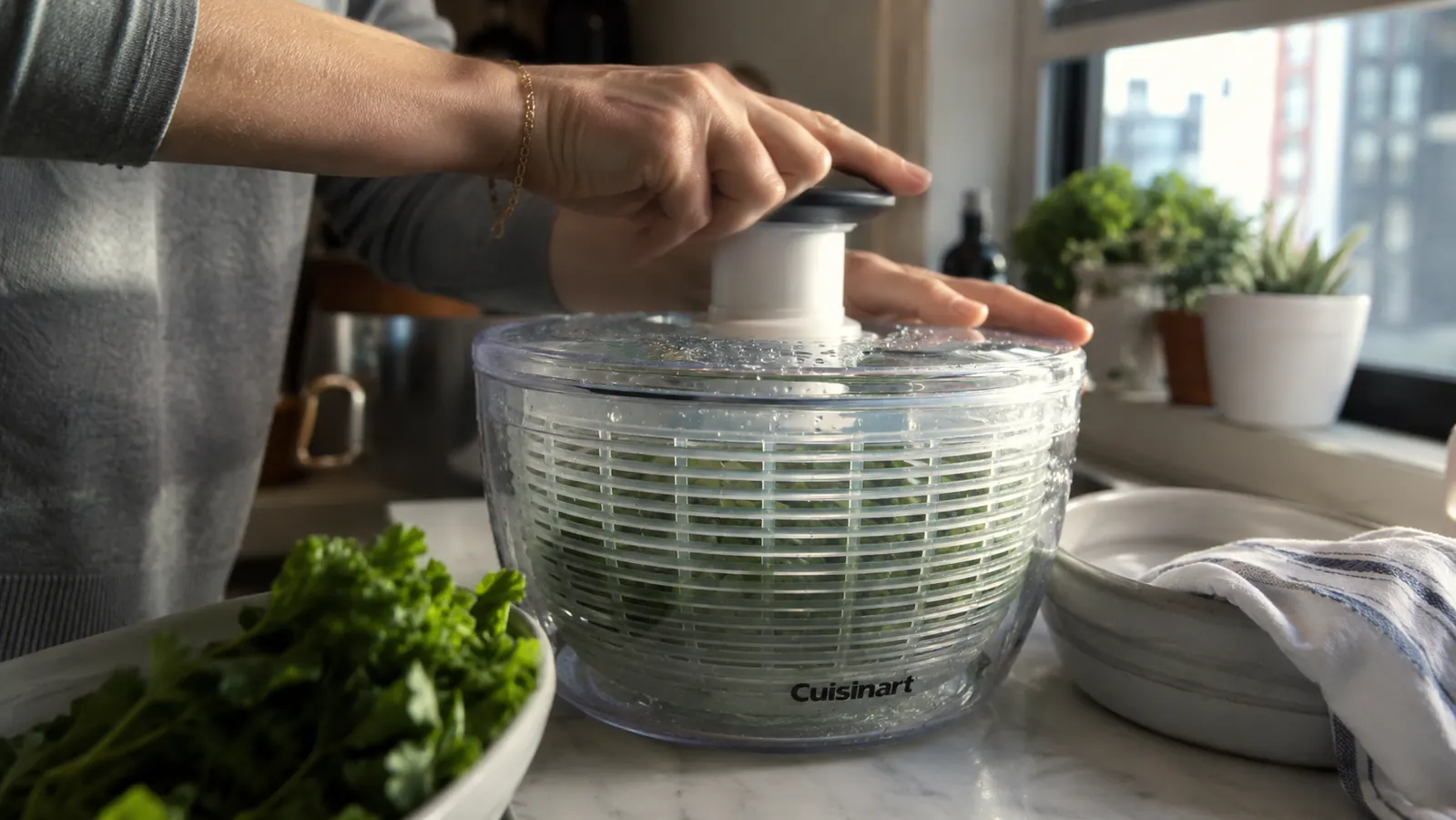
I almost boxed the Cuisinart Salad Spinner back up and returned it during the first week I owned it. Not because it failed to dry lettuce, it did that part fine right out of the gate, but because the pump squeaked so loudly every time I used it that my downstairs neighbor asked if I'd bought some kind of exercise equipment. That's the kind of detail you don't see in a five-star review, and it's exactly the kind of thing I want to talk about here instead of just repeating how well it spins water off romaine, which, for the record, it does.
This is the honest version of my experience with this spinner, the parts that don't make it into a five-star headline. I've had mine in daily-ish rotation for about ten weeks now, long enough to get past the honeymoon phase and into the part where a gadget either earns a permanent spot in your kitchen or gets quietly demoted to the back of a cabinet. Spoiler: this one earned its spot, but not without a few surprises I wish someone had warned me about before I bought it.
The Quick Verdict
A genuinely useful spinner that dries greens well once you get past a noisy first week and a couple of quirks nobody puts in the bullet points.
Amazon Check Today's Price →Here's what actually happens after the return window closes
See current availability and today's price for the Cuisinart Salad Spinner on Amazon before deciding.
Amazon Check Today's Price on Amazon →How We Tested
My test wasn't scientific. It was just real weeknight cooking in a kitchen with maybe four feet of counter space to spare, which means every gadget I own has to justify itself constantly. I ran the spinner through eleven different kinds of produce over ten weeks, the usual romaine and spinach, but also fresh basil, sliced cucumbers for a quick pickle, blueberries after rinsing them for a Sunday pancake batch, and even shredded cabbage for slaw. I wanted to know if it was a one-trick lettuce tool or something that actually earned daily use.
I also made a point of using it the way a distracted person actually would, not the way a product photo shows it. That means sometimes overfilling the basket because I was in a hurry, sometimes letting the basket sit wet in the sink overnight because I forgot about it, sometimes running it on a countertop that wasn't perfectly level. If a gadget only works under ideal conditions, I want to know that upfront, not find out the hard way three weeks in.
I also asked two people who visited during this testing window, my sister and a coworker, to use the spinner without any instructions from me and just tell me afterward what confused them. Both of them got stuck on the exact same step without any prompting, which told me the lid quirk further down in this review isn't just a personal quirk of mine, it's baked into how the thing is designed, and it's worth knowing before you're standing in your own kitchen wondering the same thing.
I did not go into this hunting for problems. I went in wanting a spinner that would replace the shredded paper towel routine I'd been doing for years. What follows is what actually happened, good and bad, in the order I ran into it.
The Squeak Nobody Mentions in the Q&A Section
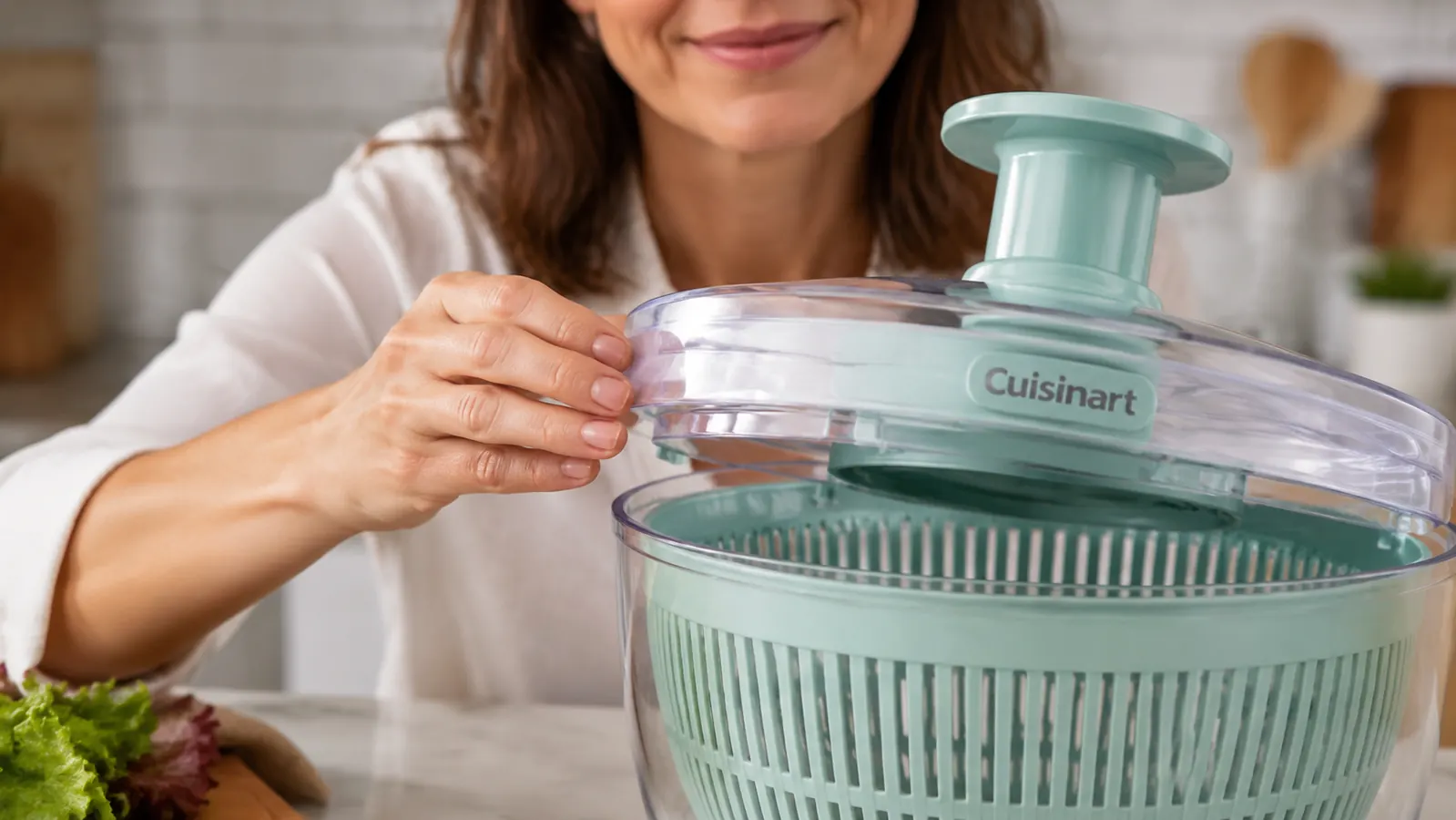
The first thing I noticed, on day two, was a distinct squeak every time I pressed the pump top down. Not a subtle sound, an actual high-pitched noise that made me wonder if something inside the mechanism wasn't seated right. I checked the basket alignment, made sure nothing was jammed in the gears underneath the lid, and pumped it a few more times just to see if it was consistent. It was. Every single pump, the same squeak.
A little bit of digging told me this is common enough with this spinner that it's not a defect, it's just how the gears sound when they're dry. A tiny drop of food-safe oil on the visible gear teeth under the lid quieted it down within a day, and it hasn't come back since. I'm including this because if I'd known it ahead of time, I wouldn't have spent an evening convinced I'd bought a dud. If yours squeaks on arrival, that's normal, not broken.
It's a small thing, but it's exactly the kind of detail that separates a five-star review written after one use from an honest one written after actually living with the product. The squeak didn't hurt performance at all, it dried greens just as well on day two as it does now, but it did make me second-guess a purchase I ended up being glad I kept. I've since read enough scattered comments elsewhere to know I wasn't the only one who briefly assumed theirs had arrived defective.
What Happens If You Don't Dry the Basket Fully
Here's something the marketing photos definitely don't show you. About three weeks in, I noticed a faint smell coming from the spinner basket, not overpowering, but the kind of slightly sour, damp smell that means moisture got trapped somewhere it shouldn't have. I traced it to the ridges where the mesh basket meets the plastic rim, a spot that holds a thin film of water if you just set the basket down wet after washing it instead of actually drying it or standing it up to air out.
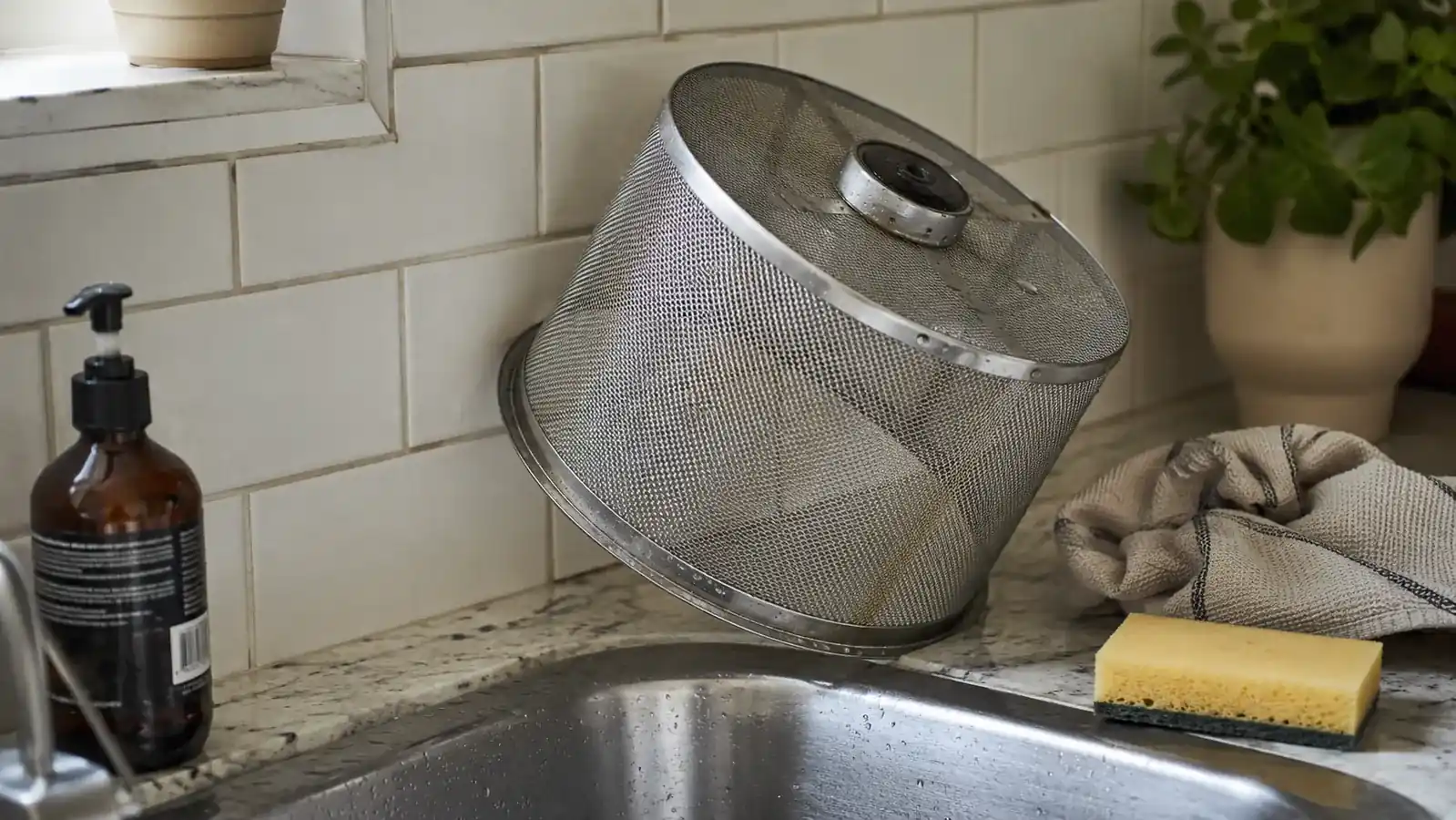
The fix was simple once I figured it out. I stopped stacking the wet basket flat in the dish rack and started leaning it at an angle against the wall behind my sink instead, mesh side down so water actually drains instead of pooling in those seams. Smell gone within two uses. But I wish this had been mentioned somewhere, because for about a week I genuinely wondered if I'd bought a spinner that was going to mildew on me no matter what I did.
If you're someone who tends to leave dishes half put-away, or if you're washing greens on a rushed morning and just want to shove the basket in the rack and move on, build in the extra ten seconds to prop it at an angle. It's a minor habit change, but it's the difference between this thing smelling fine after two months and smelling like a gym bag.
The Colander I Used to Own, and Why I Almost Went Back to It
Before this spinner, I used a plain plastic colander with holes I'd hand-shake over the sink, then finish drying whatever I could with a dish towel. It wasn't great, but it also wasn't a thing that took up real shelf space, and there was a stretch in week four of owning the Cuisinart when I genuinely considered digging that old colander back out of the donation pile.
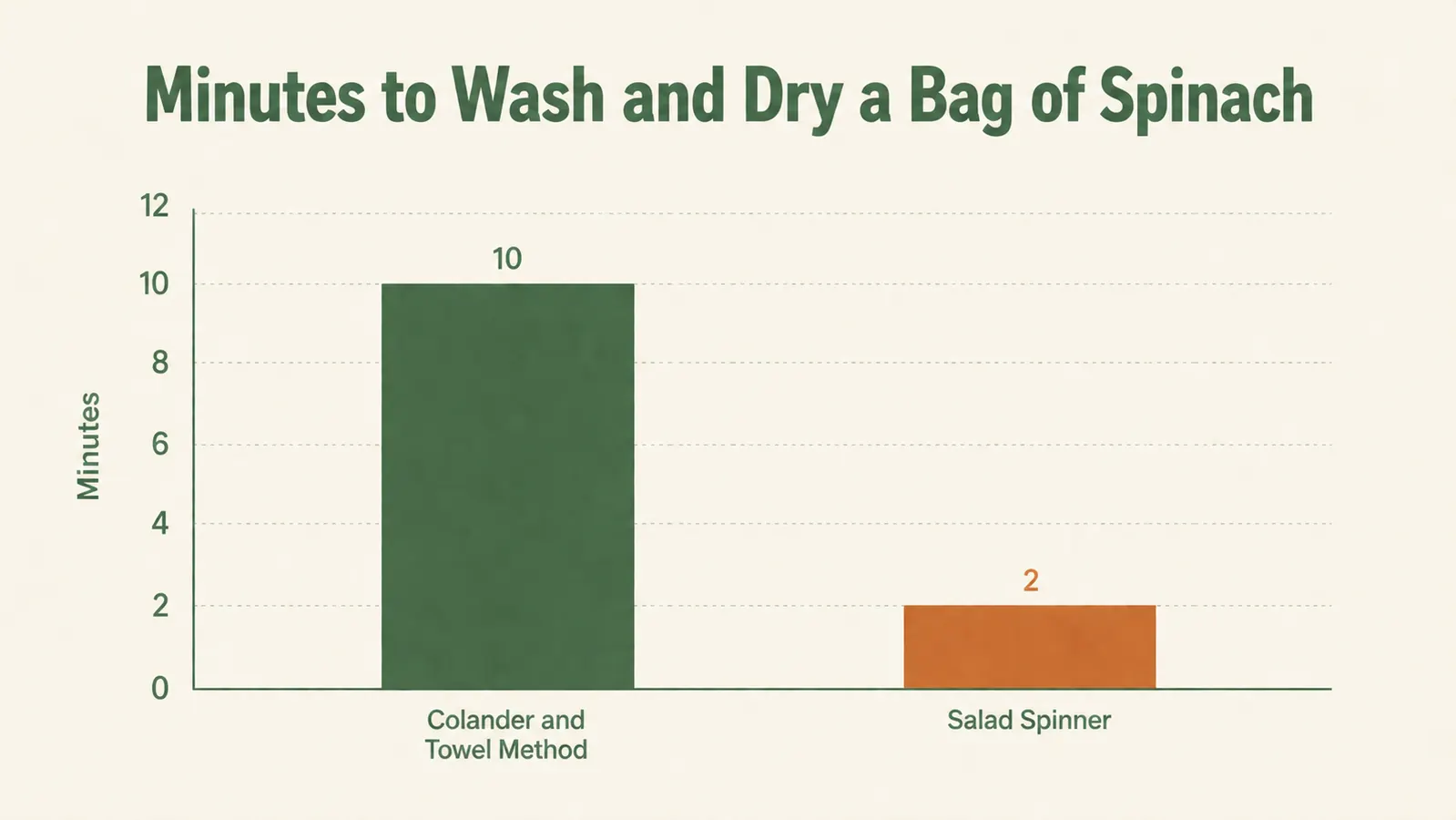
What stopped me was timing myself one more time, honestly, out of spite more than curiosity. Washing and drying a bag of spinach with the old colander-and-towel method took me just under four minutes and used three paper towels. The same bag in the spinner took about a minute and a half and used zero paper towels. Multiply that out over ten weeks of near-daily salads, and the time and paper towel savings are real enough that the old colander stayed in the donation pile.
I'll say this plainly though. If you only make a salad once a week, or if your kitchen genuinely has no spare shelf space, the math doesn't work out the same way for you. This is a tool that pays off with frequency of use. It's not a gadget that's worth owning if it's going to sit in a cabinet nine days out of ten, no matter how well it performs on the days you do pull it out.
It Doesn't Fit Under My Kitchen Faucet the Way I Expected
Something else nobody mentioned before I bought this: the bowl is wide enough that it barely fits under my kitchen faucet at an angle, and filling it with the basket already sitting inside means I have to tilt the whole assembled unit sideways just to get water in without it sheeting over the rim onto the counter. My kitchen has a fairly ordinary single-basin sink, nothing unusual about it, and I still had to rearrange my routine around this one detail.
I solved it by filling the basket separately in the sink basin before setting it down into the bowl, instead of trying to fill the whole assembled spinner at once under the running tap. It adds maybe ten seconds to the process, which isn't nothing when you're doing this several times a week, but it stopped the water from sheeting over my counter every single time. If your sink is on the smaller side or your faucet sits low over the basin, test this before you build it into your everyday routine.
I actually tested this theory at my sister's apartment too, since her kitchen has an even smaller single-basin sink than mine. Same result. She had to do the two-step fill from the very first use, which told me this isn't just a quirk of my particular counter setup, it's a real function of how wide this bowl is relative to a lot of standard apartment sinks. Worth knowing before you assume you can rinse the whole thing hands-free under a running faucet the way you might with a smaller colander.
The Lid Doesn't Lock the Way You'd Expect
One quirk that took me longer than I'd like to admit to figure out. The lid has to be seated at a specific angle before the pump top will actually engage and spin the basket. The first several times I used it, I'd press down and get nothing, no spin, just a stuck pump handle, and I'd assume something was broken. It wasn't broken. I just hadn't lined up the little tabs on the underside of the lid with the matching slots on the bowl.
Once you feel that click of the lid actually seating correctly, you never forget it, and after the first week it becomes second nature. But nobody mentions this in the box or in the handful of reviews I read before buying, and I know from a comment my sister left when she borrowed mine for a barbecue that I'm not the only one who stood there confused, pumping a handle that wasn't doing anything, before realizing the lid wasn't seated.
What I Liked
- Dries a genuinely wide range of produce well, not just lettuce
- The initial pump squeak is a known quirk, not a defect, and is easy to fix with a drop of oil
- Saves real time and paper towels once it's part of your weekly routine
- The lid locking issue disappears completely after the first week of use
Where It Falls Short
- New units can squeak loudly for the first several uses
- Basket can develop a musty smell if left flat and wet instead of air-dried at an angle
- Bowl can be awkward to fill directly under a smaller kitchen faucet
- Lid has to be seated at a specific angle before the pump will engage, which isn't obvious out of the box
- Only pays off in time savings if you're using it several times a week
The squeak, the smell, the lid that won't lock crooked. None of it was a dealbreaker. All of it would have saved me a confused first week if someone had just said it out loud.
Who This Is For
This is for someone who already eats salads or cooks fresh greens often enough that a few minutes saved per use actually adds up, and who's willing to spend the first week getting used to a couple of quirks in exchange for a tool that works well after that. It's also a good fit if you're the type who'll actually adjust a small habit, like propping the basket to dry at an angle or filling it in two stages under the tap, in exchange for a gadget that keeps performing well long after the honeymoon phase wears off. If you meal prep on Sundays and wash a week's worth of greens in one sitting, the time savings compound fast enough to make the learning curve worth it.
Who Should Skip It
If you're not going to tolerate a squeaky first week, or if you want a gadget that works perfectly the instant it's out of the box with zero learning curve, this might frustrate you more than it helps. And if salad and fresh greens are an occasional thing in your kitchen rather than a weekly habit, the quirks and the counter space it asks for probably aren't worth it for how often you'd actually reach for it. Someone with a genuinely tiny sink and no patience for a two-step fill routine might be happier with a smaller, simpler colander instead.
Know the quirks going in, then decide for yourself
Check today's price and current availability for the Cuisinart Salad Spinner on Amazon.
Amazon Check Today's Price on Amazon →