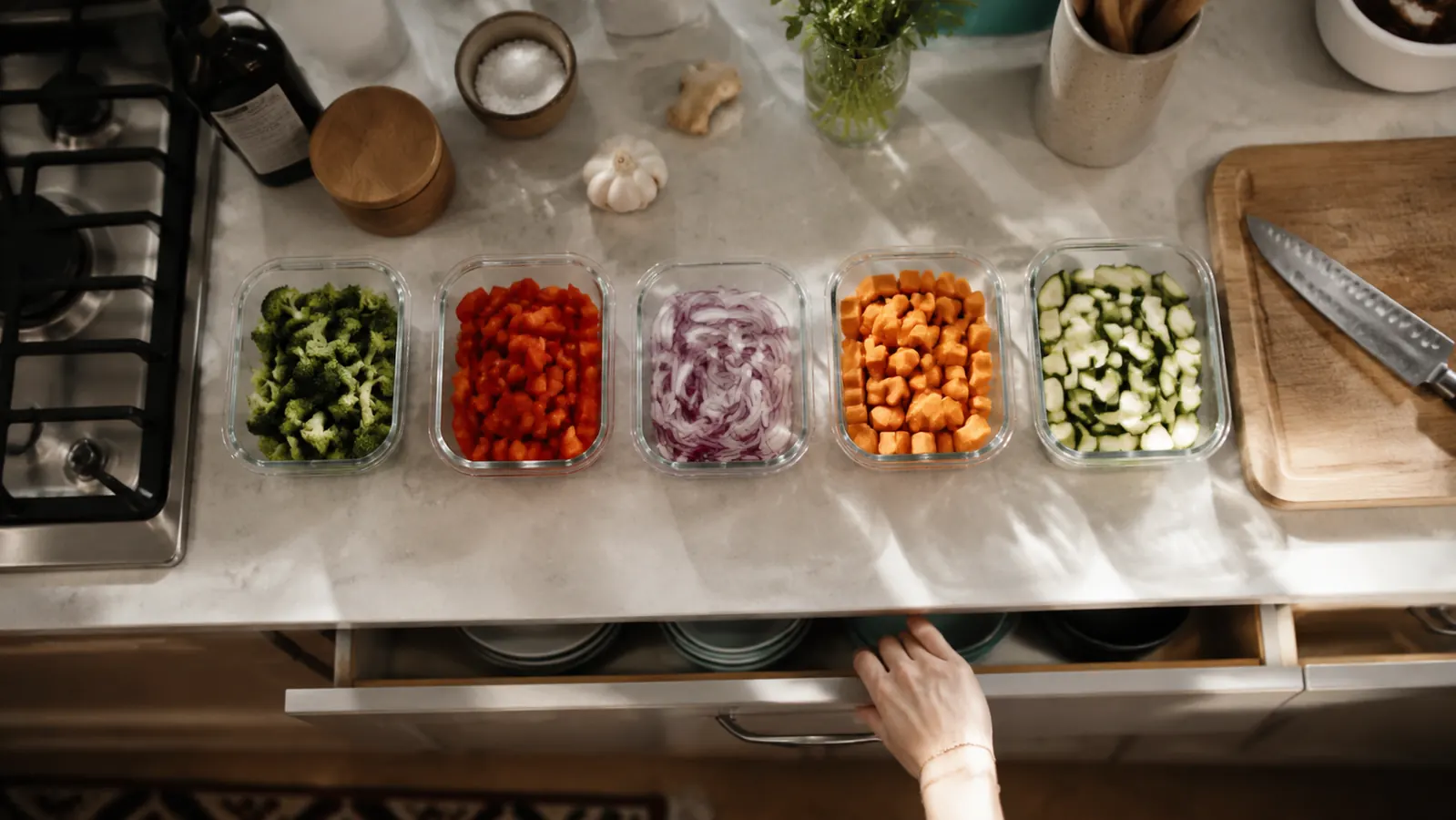
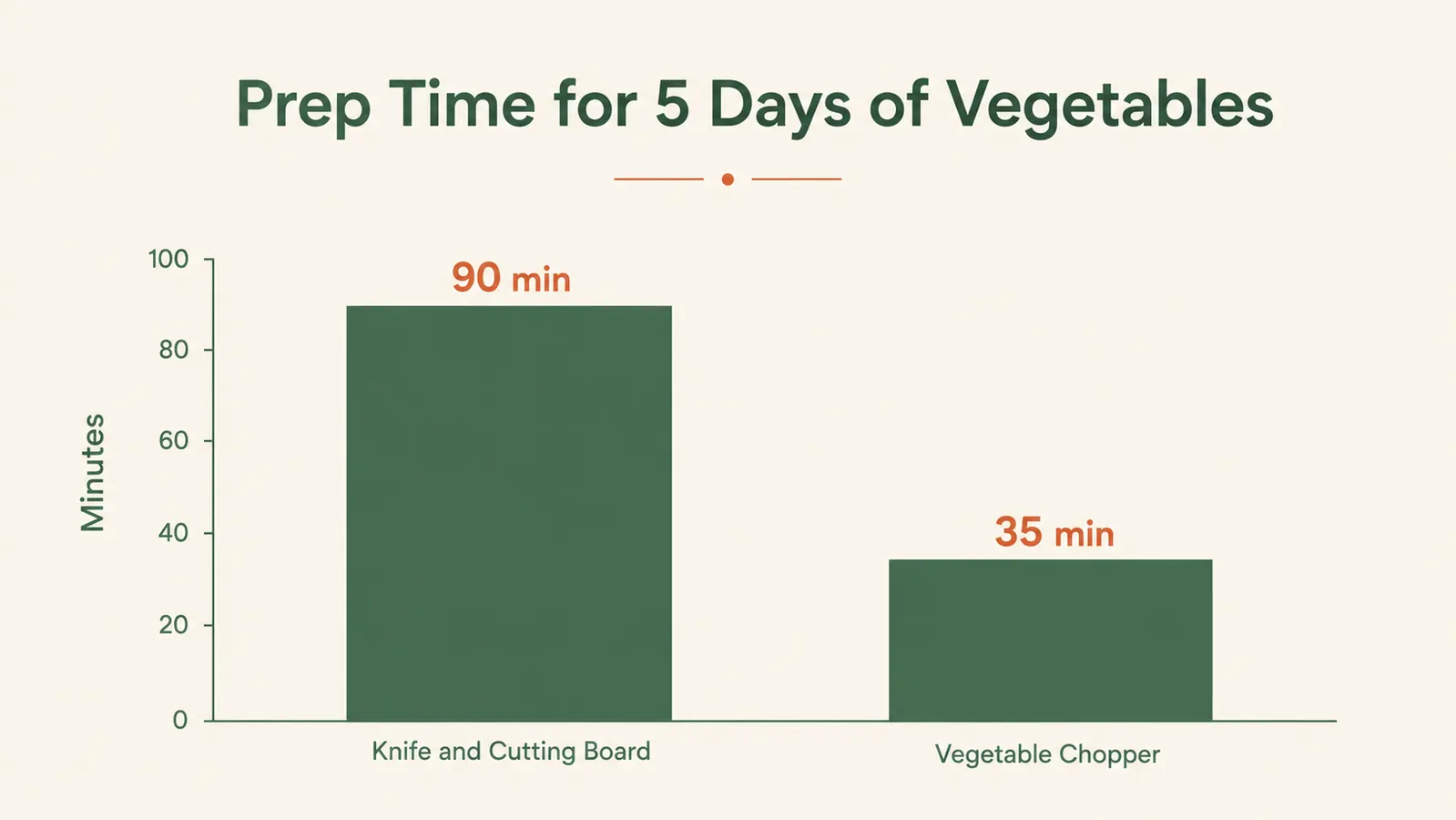
Sunday used to mean two things in my kitchen: a full pot of coffee and ninety minutes hunched over a cutting board, dicing onions, bell peppers, and sweet potatoes until my wrist ached. That was before I started using a vegetable chopper to get five days of meals cut and stored before noon. I'm Dana, I test kitchen gadgets in my small city kitchen, and what follows is the exact system I use every week with the Fullstar Pro vegetable chopper to prep a week of dinners in well under forty minutes.
I want to be upfront about something. A vegetable chopper will not turn you into a line cook overnight, and it will not chop a whole butternut squash without a little help getting the skin off first. What it will do is take the slowest, most repetitive part of meal prep, the mindless dicing, mincing, and slicing, and cut that time by more than half. The system below is built around that one strength. Follow it in order and you'll walk away with a fridge full of labeled containers instead of a sink full of knives.
My kitchen is small, one counter run and a two-burner stretch of stove, so I don't have room for a system that leaves cutting boards and mixing bowls stacked everywhere. My partner Mark does most of the cooking Monday through Thursday, which means my Sunday job is making his job boring in the best way, everything already cut, already labeled, already in the fridge. Five nights a week we're eating some version of stir fry, sheet pan chicken, tacos, a grain bowl, and a soup, and every one of those dinners starts with the same handful of vegetables cut a different way.
Stop losing your Sunday afternoon to a cutting board
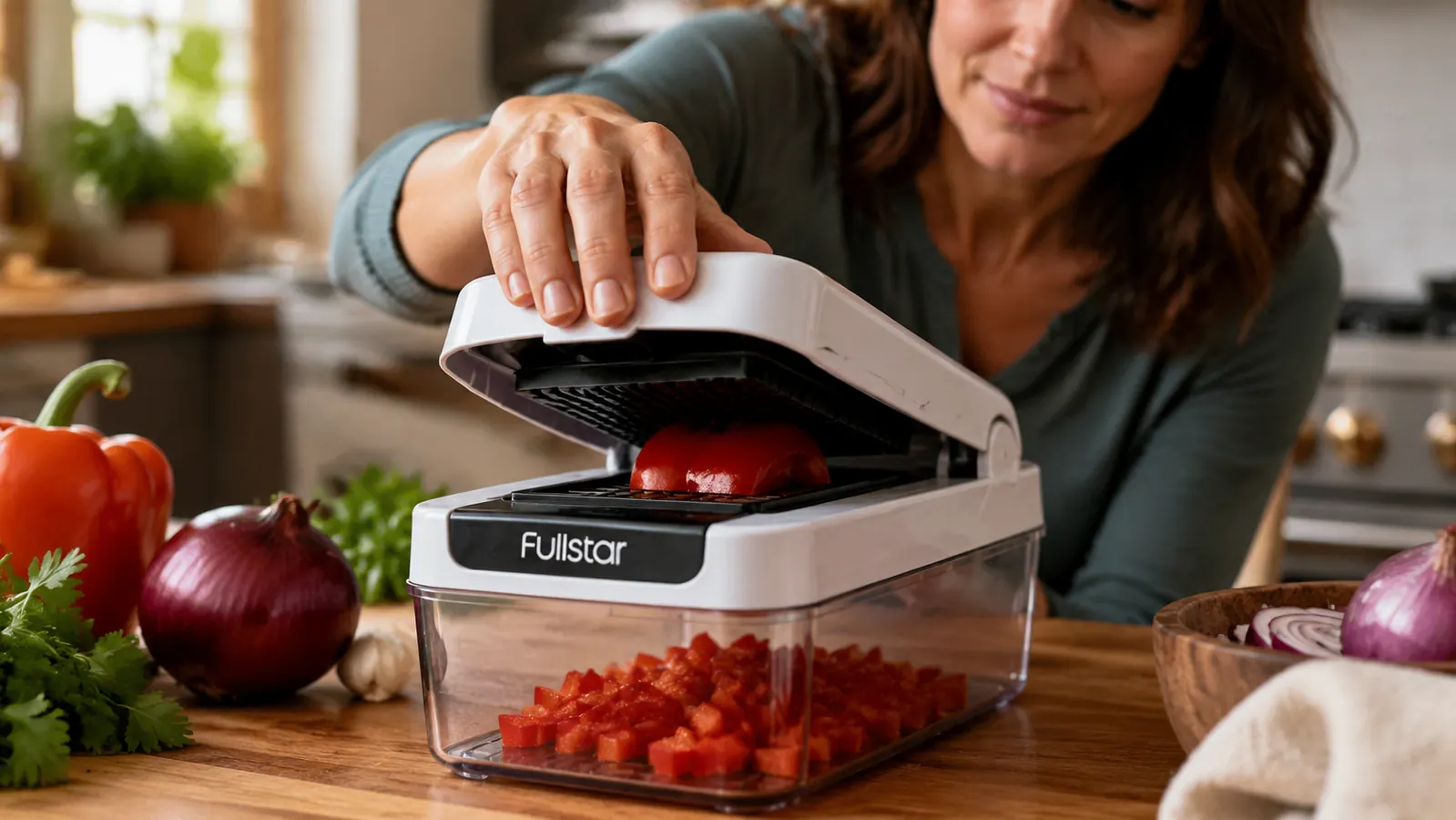
The Fullstar Pro vegetable chopper is the tool that got my prep day down from ninety minutes to under forty. It comes with a container underneath so the diced vegetables land somewhere useful instead of scattering across the counter.
Amazon Check Today's Price on Amazon →Step 1: Pick your blade before you pick your vegetable
The Fullstar Pro comes with interchangeable blade inserts, and picking the right one first saves you from re-cutting anything. The coarse dicer is my default for onions, bell peppers, and zucchini going into a stir fry or a sheet pan dinner. The fine dicer is what I reach for on Monday, when I'm making a soffritto base for soup and want the onion small enough to melt into the pot rather than show up as a chunk. The julienne blade handles carrots and cucumbers for slaws and quick pickles, and the spiralizer attachment turns zucchini into noodles for the one night a week I'm avoiding pasta.
Lay out your blades before you touch a single vegetable. I keep mine in a small drawer tray sorted by size, largest holes to smallest, so I'm not digging through a junk drawer mid-prep. This alone probably saves me five minutes a session, which does not sound like much until you multiply it by fifty-two Sundays a year.
One mistake I made early on was using the fine dicer for everything because it seemed like the more precise choice. Fine dice on a firm potato takes real force and tends to jam the blade grid halfway through, so I switched back to the coarse dicer for anything going into a roast or a hash and saved the fine blade for vegetables that actually need to disappear into a sauce or a soup. Matching blade to dish, not defaulting to whichever blade feels most impressive, is what actually keeps the chopper fast.
Step 2: Build a staging line before the chopper touches anything
I lay out my ingredients in the order I'll cut them, driest and least fragrant first. That means bell peppers and carrots go before onions, and onions go before anything with strong juice like tomatoes. The reason is simple, the chopper's blade grid holds onto smell and residue between uses, and cutting a delicate vegetable right after a pungent one means you taste onion in your cucumber. Staging in the right order means fewer rinses between vegetables, which is where a lot of the time savings actually come from.
I also set the catch container right under the chopper body and keep a second empty bowl next to it. Some vegetables, like potatoes for a hash, need a second pass through a finer blade, and having a landing spot for the first pass keeps the counter from turning into a mess of half-chopped piles.
On a typical Sunday my line runs carrots, then bell peppers, then zucchini, then onion, then tomato last. By the time I get to the onion my hands already know the rhythm of loading the chamber and pressing the handle, so the actual chopping speeds up as I go. Starting with the vegetable you're least worried about also gets you warmed up before you hit the one that makes your eyes water.
Step 3: Batch by texture across every recipe, not one recipe at a time
This is the step that actually changes your Sunday. Instead of prepping ingredients recipe by recipe, which means switching blades and rinsing constantly, I look at all five dinners for the week and group every vegetable that needs the same cut. If three recipes call for diced onion, I chop all the onion for all three recipes in one pass with the coarse dicer, before I ever touch the julienne blade. Same for carrots, same for peppers.
The math is straightforward. Five dinners with an average of three chopped vegetables each is fifteen individual chopping tasks if you go recipe by recipe, with a blade swap and a rinse between most of them. Grouped by cut type, that same week is usually four or five batches total. Fewer batches means fewer blade changes, and blade changes are where most of the wasted time in any chopping task lives, whether you're using a knife or a chopper.
A real week from my kitchen looked like this: coarse-diced onion for tacos, the stir fry, and the soup all in one pass, coarse-diced bell pepper for the stir fry and the sheet pan chicken in the next pass, julienned carrot for the slaw and the grain bowl after that, and finally the spiralizer for zucchini noodles on their own. Four passes, four blade changes, and every vegetable for five dinners was done before my coffee went cold.
Step 4: Store by how soon you'll actually use it
Not every chopped vegetable holds up the same way in the fridge, and this is the part people skip when they're excited about how fast the chopping went. Onions and peppers keep well for the full five days in a sealed glass container. Anything with high water content, like diced cucumber or tomato, I store with a folded paper towel in the container to soak up condensation, or I hold off cutting it until day three or four. Anything I'm not using within three days, I portion into freezer bags flat, so they thaw fast for a weeknight soup or stir fry.
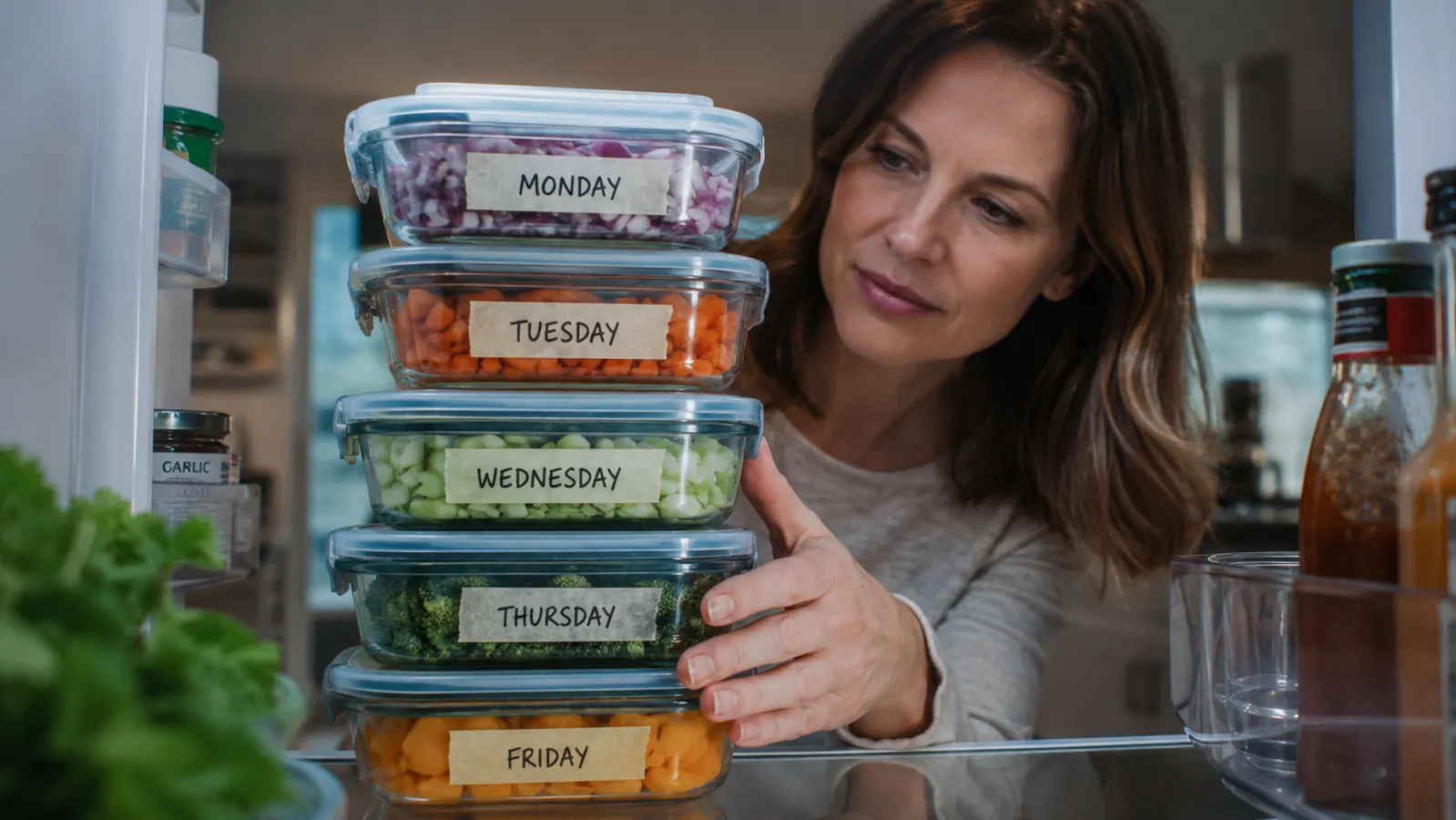
I use the same five or six glass containers every week and label the lids with a strip of masking tape and a marker, day of the week and dish it's meant for. It sounds like a small detail, but on a Wednesday at six thirty, not having to guess whether the diced onion is for tacos or for the pasta sauce is worth the fifteen seconds of labeling on Sunday.
For the freezer bags, I press the air out flat before sealing and stack them like files rather than balling them up, which means a bag thaws in about ten minutes under cold running water instead of sitting frozen solid in a clump. Diced onion and pepper freeze especially well this way, and I always keep at least one bag on hand for the nights the week just doesn't go the way I planned it.
Step 5: Break the chopper down and reset it before you put it away
The reason a chopper earns its drawer space instead of becoming another gadget I never touch again is that I clean it the same day, every time. The blade inserts on the Fullstar Pro pop out for rinsing, and the catch container and lid are dishwasher safe on the top rack. I do a quick rinse under the tap between strong-smelling vegetables during prep, then a full wash after everything is put away. Letting bits of onion or garlic dry onto the blade grid overnight is the single fastest way to turn a good tool into a chore, and it's almost always why a chopper ends up in the back of a cabinet.
After more than a year of weekly use, my blade grids are still clean-cutting with no bent squares or dull edges, and I credit that entirely to never letting anything dry on them. A quick rinse takes ten seconds. Soaking dried vegetable pulp out of a grid the next morning takes ten minutes and usually leaves a few squares slightly bent from scrubbing.
What Else Helps
A vegetable chopper handles the cutting, but it's not doing the washing or the drying for you. I run leafy greens through a salad spinner before they ever hit the chopper, since wet lettuce clogs the blade grid and slows everything down. A mandoline earns its spot for anything you want cut paper thin and uniform, like cucumber for quick pickles, since the chopper's julienne blade is built more for volume than for precision slicing. None of these tools replace each other. They handle different jobs, and using the right one for each step is what actually gets a full week of vegetables done before lunch.
I get asked a lot whether a food processor would just do all of this faster. For pureed soups or hummus, sure, reach for the processor. But for a chopper's actual job, uniform diced or julienned vegetables you want to see and eat as pieces, the manual chopper wins on cleanup alone. A food processor bowl, blade, and lid is three pieces to wash by hand most of the time. The chopper's container and blade insert both go straight in the dishwasher, which matters more than raw speed on a Sunday when you're trying to get out the door.
The chopper doesn't save you time by being faster than a knife on any single cut. It saves you time by turning fifteen small decisions into five batches.
Get your Sundays back with the tool I use every week
If ninety minutes of dicing is the reason meal prep keeps falling off your weekend, the Fullstar Pro vegetable chopper is the single change that made the system above actually stick for me.
Amazon Check Today's Price on Amazon →