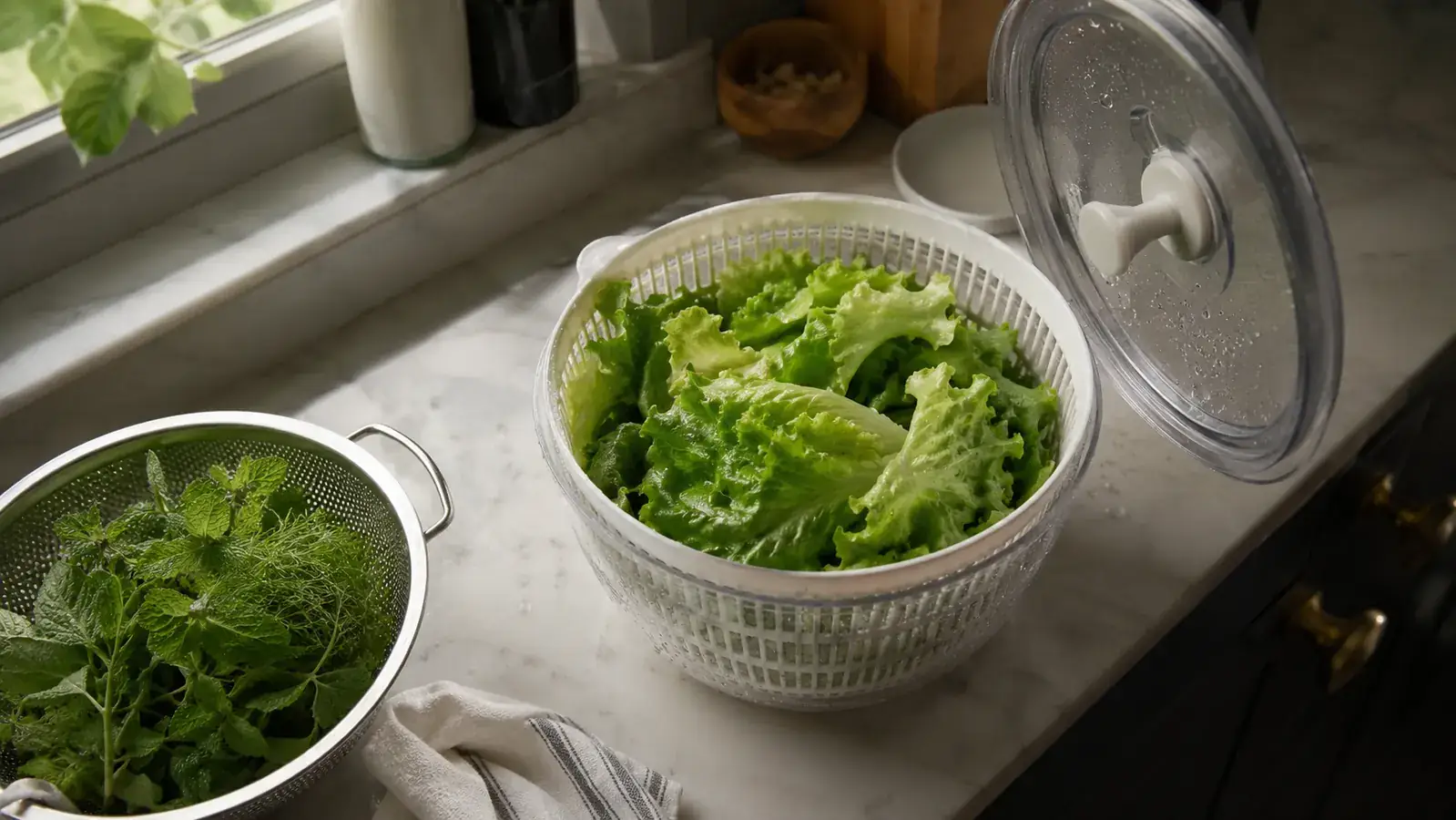
For years my salads were soggy by the time the dressing hit the bowl, and I blamed the dressing, the lettuce, everything except the real problem. The real problem was water. Wet greens dilute dressing, keep it from clinging to the leaf, and turn a crisp salad into a puddle in the bottom of the bowl within ten minutes. I'm Dana, I test kitchen gadgets in my small city kitchen, and the single change that fixed this was adding a salad spinner to my routine and using it every time, not just on the nights I felt like being fussy. What follows is the exact five-step process I use with my Cuisinart salad spinner to get a full head of lettuce, a bag of spinach, or a bundle of herbs from dirty and wet to crisp and dry in about five minutes.
I want to set expectations here. A salad spinner will not wash pesticide or wax off produce, and it will not save a head of lettuce that's already gone slimy in the crisper drawer. What it does is solve the two things that actually ruin a home salad, gritty leaves from under-washing and watered-down dressing from under-drying. Both of those are fixable in the same few minutes, with the same tool, if you do the steps in order.
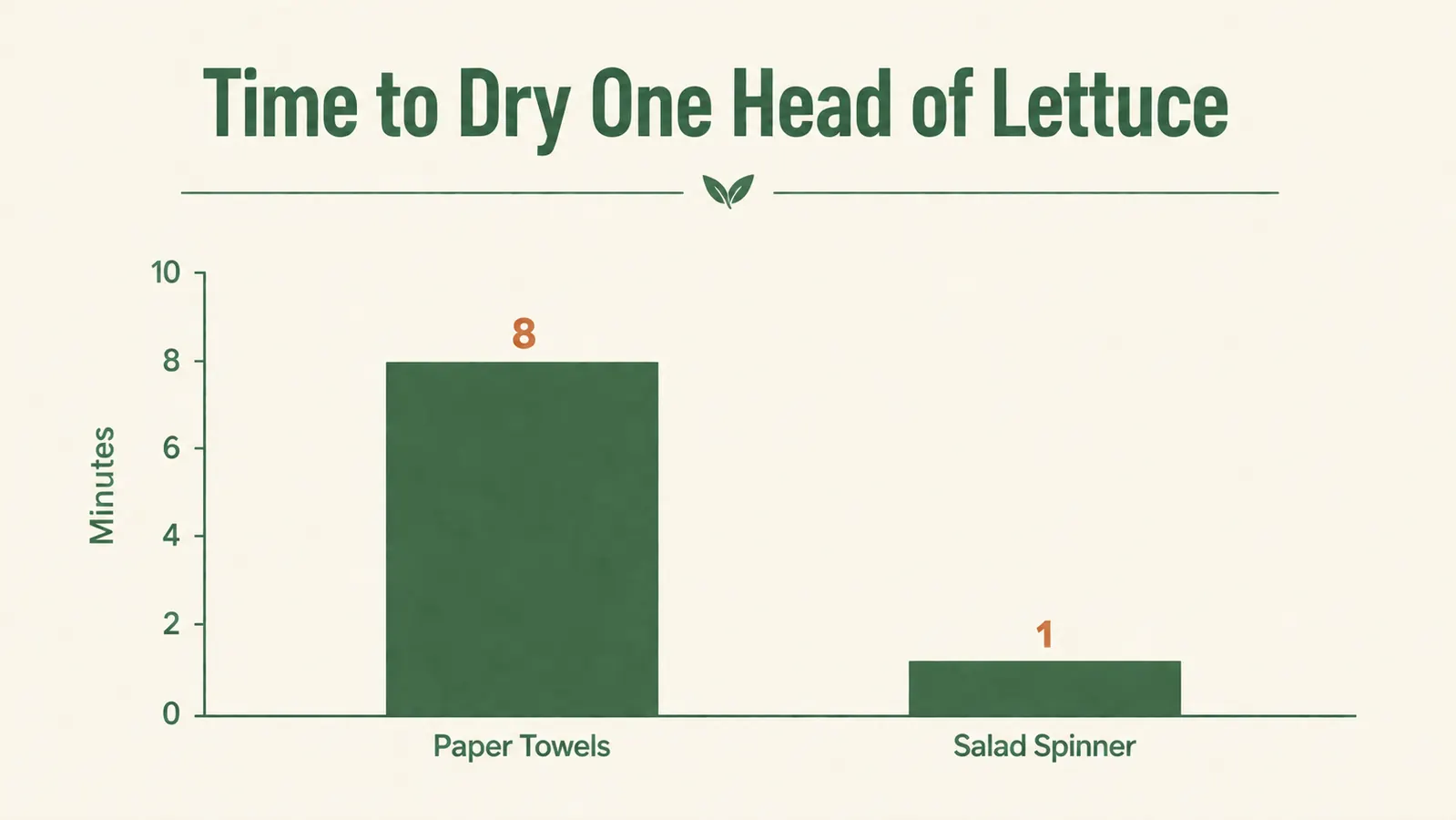
I used to think a mesh colander and a clean dish towel were good enough, and honestly, for a single side salad on a Tuesday, they can be. But once I started making salad the main event for dinner two or three nights a week, that method fell apart fast. Towel-drying leaves one by one takes real minutes, not seconds, and it still leaves the leaf edges damp where the towel didn't quite reach. The salad spinner routine below takes roughly the same total time as a lazy rinse and towel pat, but it gets the leaves genuinely dry instead of just less wet, and that difference is what actually shows up on the plate.
Stop drowning your salads before the dressing even hits the bowl
The Cuisinart salad spinner is the tool that got my greens from soggy to genuinely crisp. The bowl doubles as a storage container, so the greens go straight from spinning to the fridge without another dish to wash.
Amazon Check Today's Price on Amazon →Step 1: Fill the bowl and actually swish, don't just rinse
Most of the grit on lettuce and spinach comes from soil that clings to the leaves in the field, and a quick pass under the faucet barely touches it. I fill the outer bowl of the salad spinner most of the way with cold water, drop the basket of torn or whole leaves in, and swish it around with my hand for a good thirty seconds. The dirt sinks to the bottom of the bowl instead of staying on the leaves, which is the whole point. Running water over lettuce in a colander just pushes grit around the surface. Submerging it in a still bowl lets gravity do the work.
For herbs like cilantro and parsley, which trap the most grit down near the stems, I do two rounds of this, dumping the dirty water out and refilling between each one. If I skip this step and go straight to spinning, I end up with clean-looking but gritty greens, and gritty greens are the fastest way to make a salad feel cheap no matter how good the dressing is.
Farmers market lettuce is usually the worst offender here, since it hasn't been through a commercial wash line the way bagged greens have. A head of curly leaf lettuce fresh from a Saturday market stall can shed a genuinely surprising amount of sand into the bottom of the bowl on the first swish. I always do a second fill of clean water and swish again if the first batch of water looks cloudy, since one round is rarely enough for anything that came straight out of the ground.
Step 2: Lift the basket out of the water before you drain it
This sounds too small to matter, but it changes everything. If you pull the plug or tip the bowl to drain the dirty water while the basket is still sitting in it, all that grit at the bottom just resettles back onto the clean leaves on its way out. I lift the basket straight up and out of the bowl first, set it aside, then dump the dirty water separately. Only after the bowl is rinsed and dry do I put the basket back in for the spin.
This is also the moment to check for anything that got missed, a browning edge on a lettuce leaf, a tough stem on the spinach. It takes ten seconds to pull those out now, versus finding them with a fork later at the dinner table.
It helps that the Cuisinart basket has a solid handle built into the center, so lifting it out is a one-hand motion instead of trying to grip a slippery mesh edge with wet fingers. Some cheaper spinners skip this handle entirely, and you end up chasing a floating basket around a bowl full of dirty water, which defeats the purpose of separating the two in the first place.
Step 3: Spin in short bursts, not one long grind
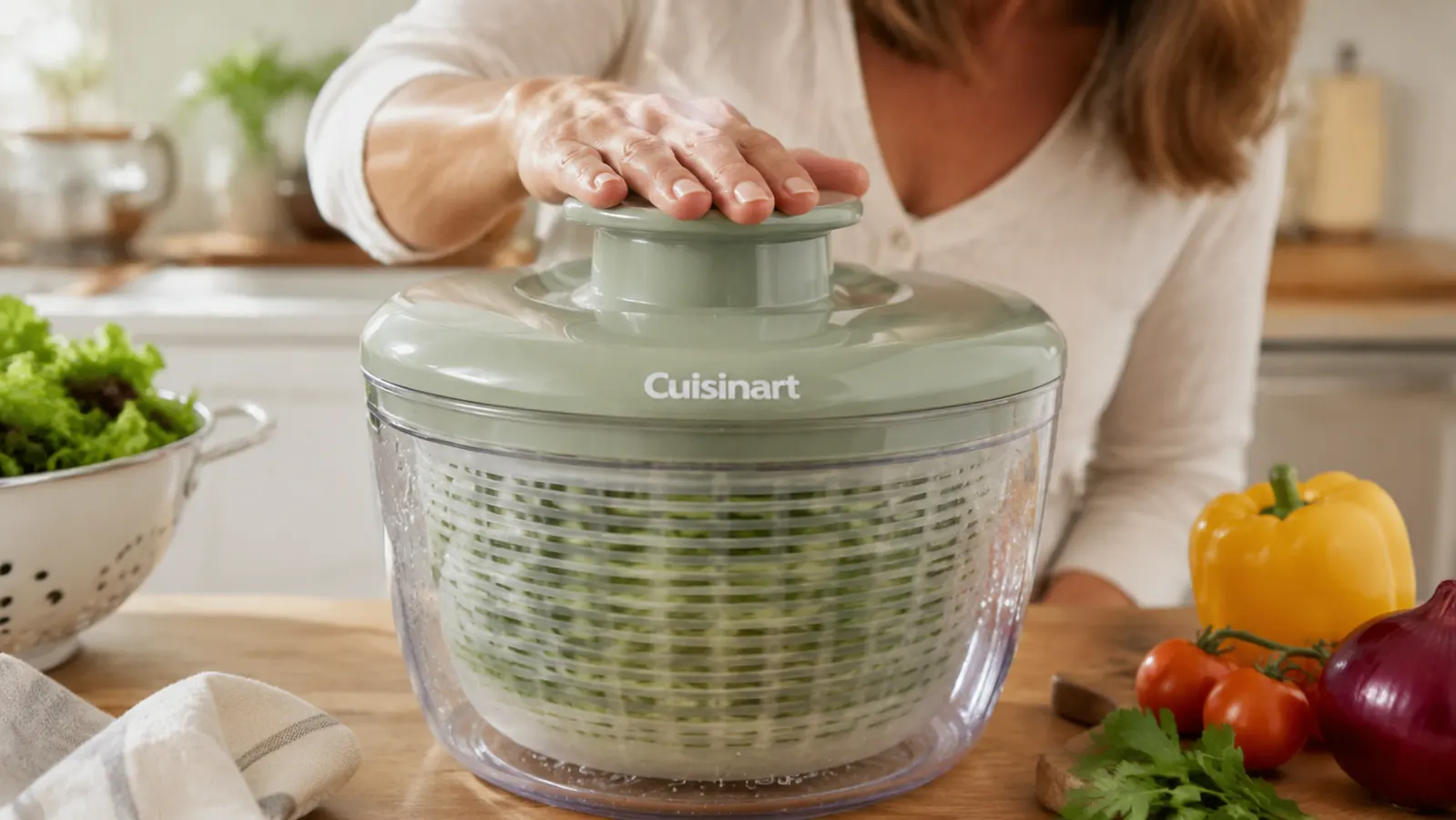
My first instinct with any pump-top salad spinner used to be to just crank it as hard as I could for as long as I could. That's actually the wrong move. Delicate greens like spinach and butter lettuce bruise against the basket wall if you spin them too hard for too long, and bruised greens go limp and brown faster in the fridge. I do three or four short pumps of the top, pause, dump any water that's collected in the bottom of the bowl, then do another three or four pumps. Two or three rounds of that gets sturdier greens like romaine and kale completely dry.
For anything soft, herbs especially, I go even lighter, just enough spins to knock the surface water off. A salad spinner is a tool for removing water, not for tumbling greens like a load of laundry, and treating it that way keeps the leaves intact instead of shredded at the edges.
I keep a mental sliding scale now. Basil and other soft herbs get maybe two light pumps total. Spinach and butter lettuce get one short round, a pause to empty the water, then one more short round. Romaine, kale, and cabbage can take a full, harder round or two without any damage, since the leaves are thick enough to shrug off the spin. Matching the intensity to the leaf is what keeps everything from turning into the same wilted texture by the time it hits the salad bowl.
Step 4: Finish stubborn spots with a folded paper towel
Even after a good spin, thick-ribbed greens like kale or the curled edges of romaine can hold a little pocket of water the spinner's centrifugal motion doesn't quite reach. Instead of running the spinner longer, which risks bruising, I lay a folded paper towel over the top layer of leaves in the basket for a few seconds and press down gently. It pulls the last bit of surface moisture off without any extra spinning.
This is also the step where I taste-test dryness with my fingers before deciding the greens are done. Truly dry lettuce should feel almost squeaky, not just damp-free. If dressing pools at the bottom of your salad bowl later, it's almost always because this step got skipped and the greens went into the fridge or the bowl slightly damp.
Romaine hearts are the leaf I check most carefully here, since the tight folds near the base hold a surprising amount of water even after a hard spin. I'll pull the basket out, fan the leaves apart with my fingers for a second, and give it one more short pump if the inner folds still feel wet. Skipping that extra check is exactly how a Caesar salad ends up watery by the second bite.
Step 5: Store the greens in the spinner bowl itself
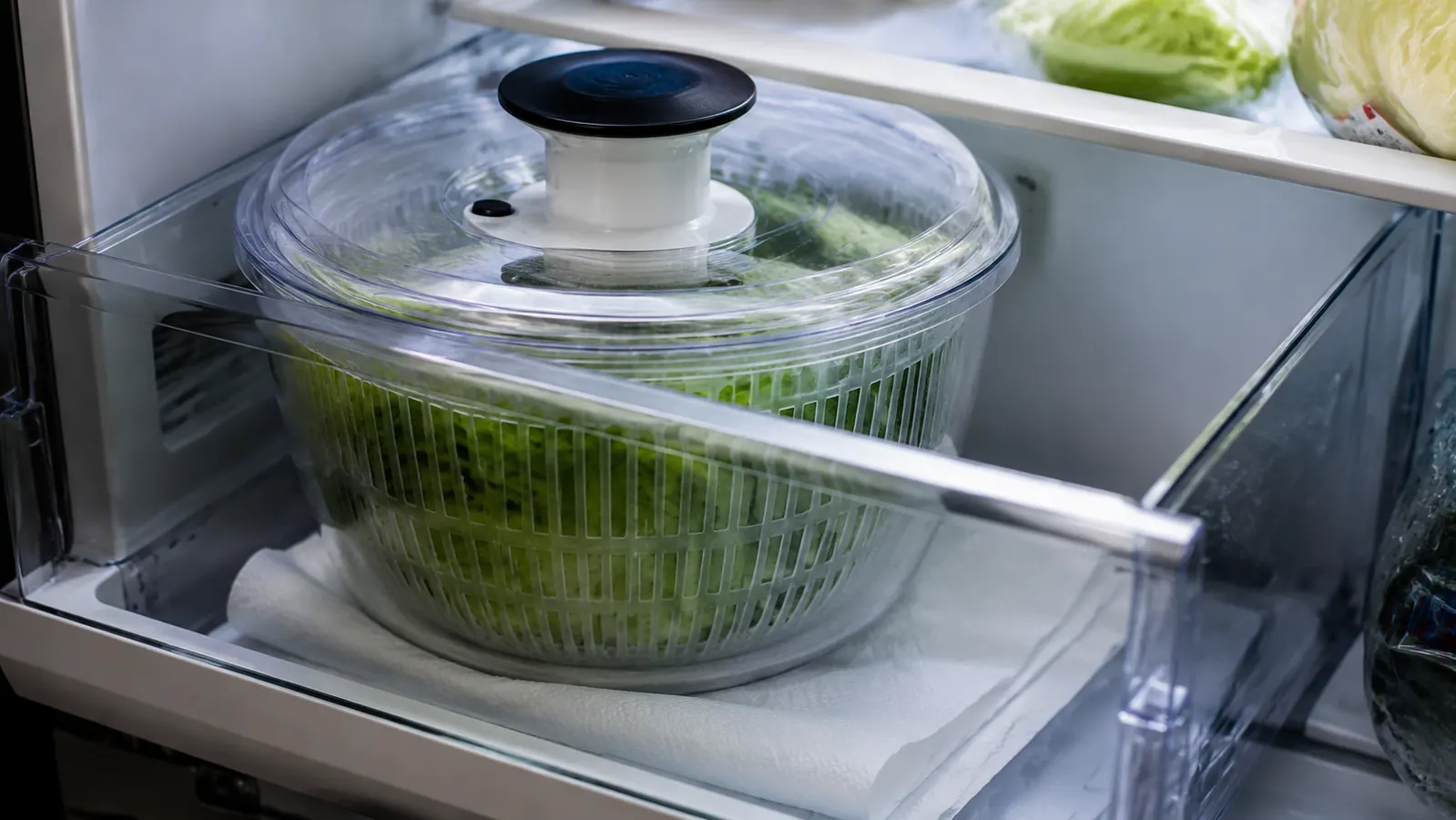
The lid on the Cuisinart spinner seals well enough that I just leave the dry greens in the bowl, lid on, and slide the whole thing into the crisper drawer. I tuck one dry paper towel along the bottom to catch any moisture that shows up over the next few days, and swap it if it gets damp. Lettuce and spinach stored this way stay crisp for four or five days, which is a real change from the wilted mess I used to pull out of a produce bag by day three.
For herbs, I do the same thing but line the basket with a dry paper towel before adding the leaves, then store the basket inside the bowl with the lid on. It keeps them from going slimy nearly as fast as leaving them loose in their original plastic clamshell.
This one habit is the reason the spinner earns permanent counter space instead of getting shoved to the back of a cabinet after a week. I buy greens once, usually on a weekend grocery run, wash and spin the whole haul in one sitting, and then I'm just reaching into the fridge for a ready-to-use bowl of dry lettuce on a Tuesday night instead of starting the whole process over from scratch.
What Else Helps
A salad spinner handles the washing and drying, but it's not doing your knife work for you. I run anything I want sliced thin, like cucumber or radish for a chopped salad, through a mandoline after the greens are dry, since wet vegetables slip on a mandoline blade and that's how people get hurt. A vegetable chopper is what I reach for when a recipe calls for a big batch of diced onion or pepper to toss into the same bowl. None of these tools do each other's job. The spinner's only job is getting water off the greens, and it does that job better than a dish towel or a colander ever will.
A sharp paring knife also matters more than people expect for the actual lettuce, since a dull blade bruises the cut edge of a head of romaine and that bruised line turns brown within a day even in a sealed container. I trim the base off with a clean, single motion right before the first wash, not after, so the cut edge gets rinsed clean along with everything else instead of sitting exposed to air.
Soggy salad was never a dressing problem in my kitchen. It was a wet lettuce problem, and the salad spinner is what actually fixed it.
Get crisp, dry greens every time with the spinner I use weekly
If watery dressing and gritty lettuce are the reason salads feel like a chore, the Cuisinart salad spinner is the one change that made this whole routine stick for me.
Amazon Check Today's Price on Amazon →