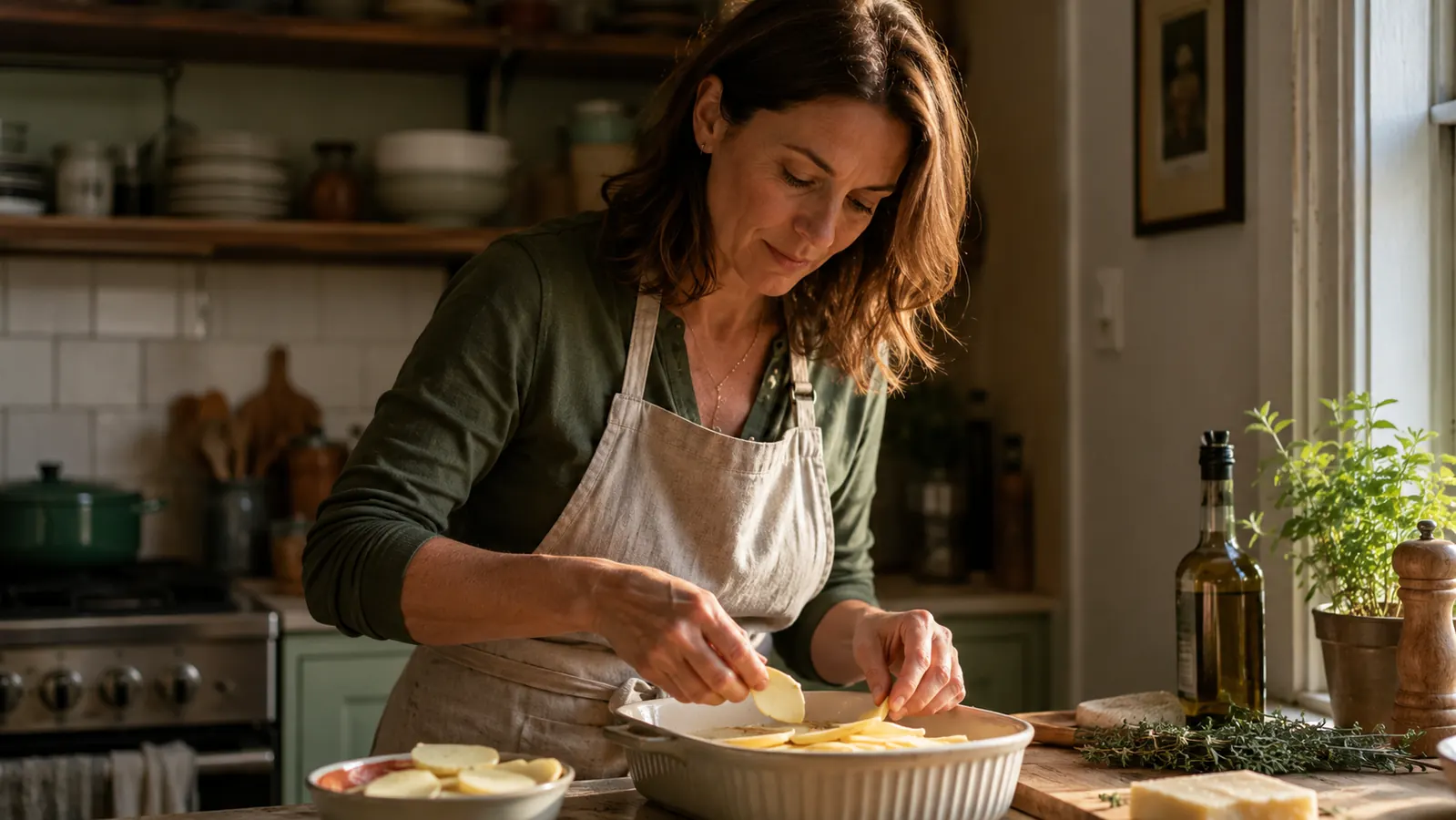
My mother-in-law Renata makes a potato gratin that people talk about for weeks afterward. Mine, for the first six years I tried to copy her recipe, came out of the oven looking like a science experiment gone wrong. Burnt lace around the edges, a soft raw center, and potato slices so uneven you could tell exactly which ones I'd rushed with the knife toward the bottom of the pile.
I've never been someone who reaches for a gadget to fix a problem I think I should be able to solve with a good knife and some patience. My kitchen is small, my drawer space is smaller, and I've thrown out enough single-purpose tools over the years to know exactly what I'm willing to make room for. So for a long time, gratin night meant me standing at the cutting board with a Benriner mandoline-shaped hole in my skill set and a knife that wasn't cutting it, literally.
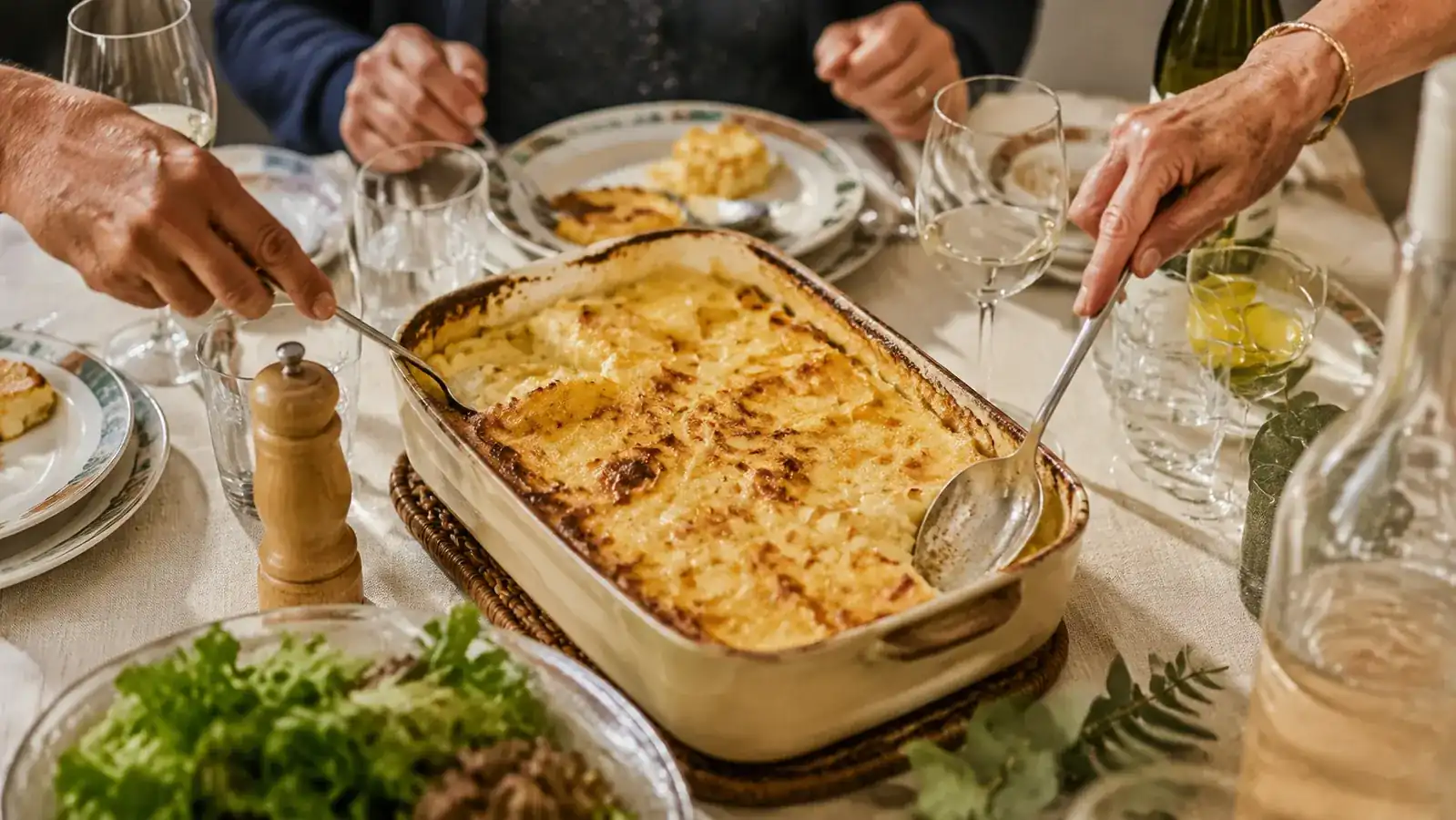
The breaking point was a Sunday last winter. Twelve people at the table, my husband Paul carving the roast, and my gratin sitting in the middle looking exactly like every other attempt. Renata was kind about it, she always is, but I caught her quietly evening out the raw center with her fork before anyone else got a plate. That's the moment I stopped telling myself a sharper knife would eventually fix this.
I'd avoided mandolines for years because everyone who owns one seems to have a story about a knuckle, and I believe them. But I finally sat down and read through what people actually said about the Benriner, the Japanese one with the four interchangeable blades and the sliding thickness dial. It kept coming up as the one serious cooks reach for even after they've owned nicer-looking ones that never got used. I ordered it mostly out of stubbornness.
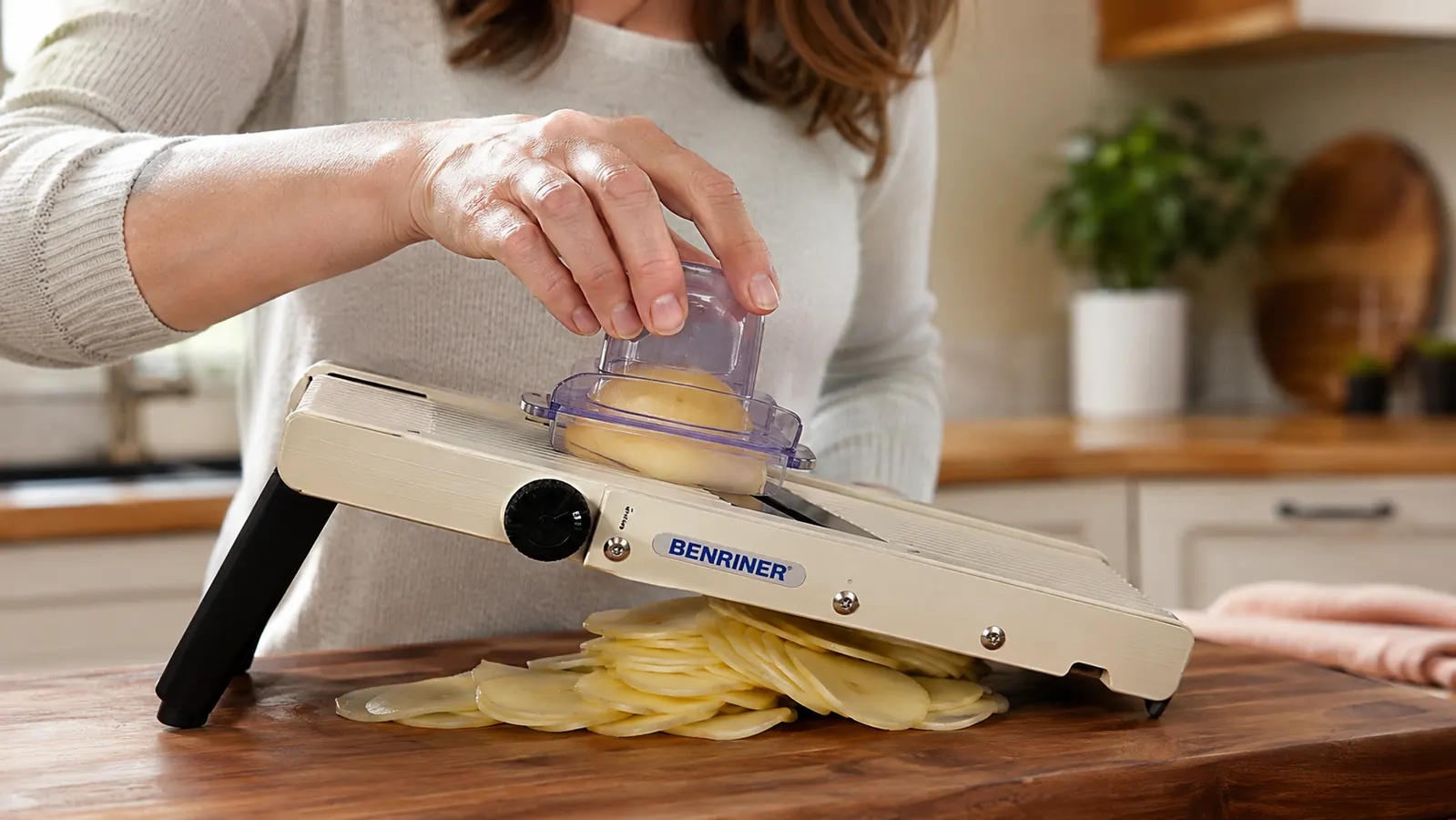
The first time I used it, I set the dial for something close to what I imagined Renata's slices looked like and ran a russet potato through with the finger guard locked in place. What came out the other side was uniform in a way my knife had never once managed, slice after slice, the same thickness all the way down. I stood there for a second just looking at the pile before I remembered I still had eleven more potatoes to go.
The slicer didn't make me a better cook. It just stopped the potatoes from lying to me about how thin they actually were.
Tired of Gratin With Burnt Edges and a Raw Center?
This is the exact mandoline I finally bought after years of uneven knife slices ruining the one dish I most wanted to nail. The adjustable dial does the consistency work a knife just can't.
Amazon See Today's Price on Amazon →That gratin, the one I made two nights after the twelve-person dinner as a kind of redo just for Paul and me, came out of the oven evenly cooked from edge to center for the first time since I started making it. The potatoes had actually cooked at the same rate because they were actually the same thickness. It sounds obvious written out like that, but it had never once occurred to me how much of my gratin problem was really a slicing problem.
I brought it to the next family gathering and didn't say anything about the slicer. Renata took a bite, paused, and asked what I'd changed. When I told her, she laughed and admitted she'd been using a Benriner mandoline for the exact same reason for probably twenty years and had just never thought to mention it, since to her it was as ordinary as owning a peeler.
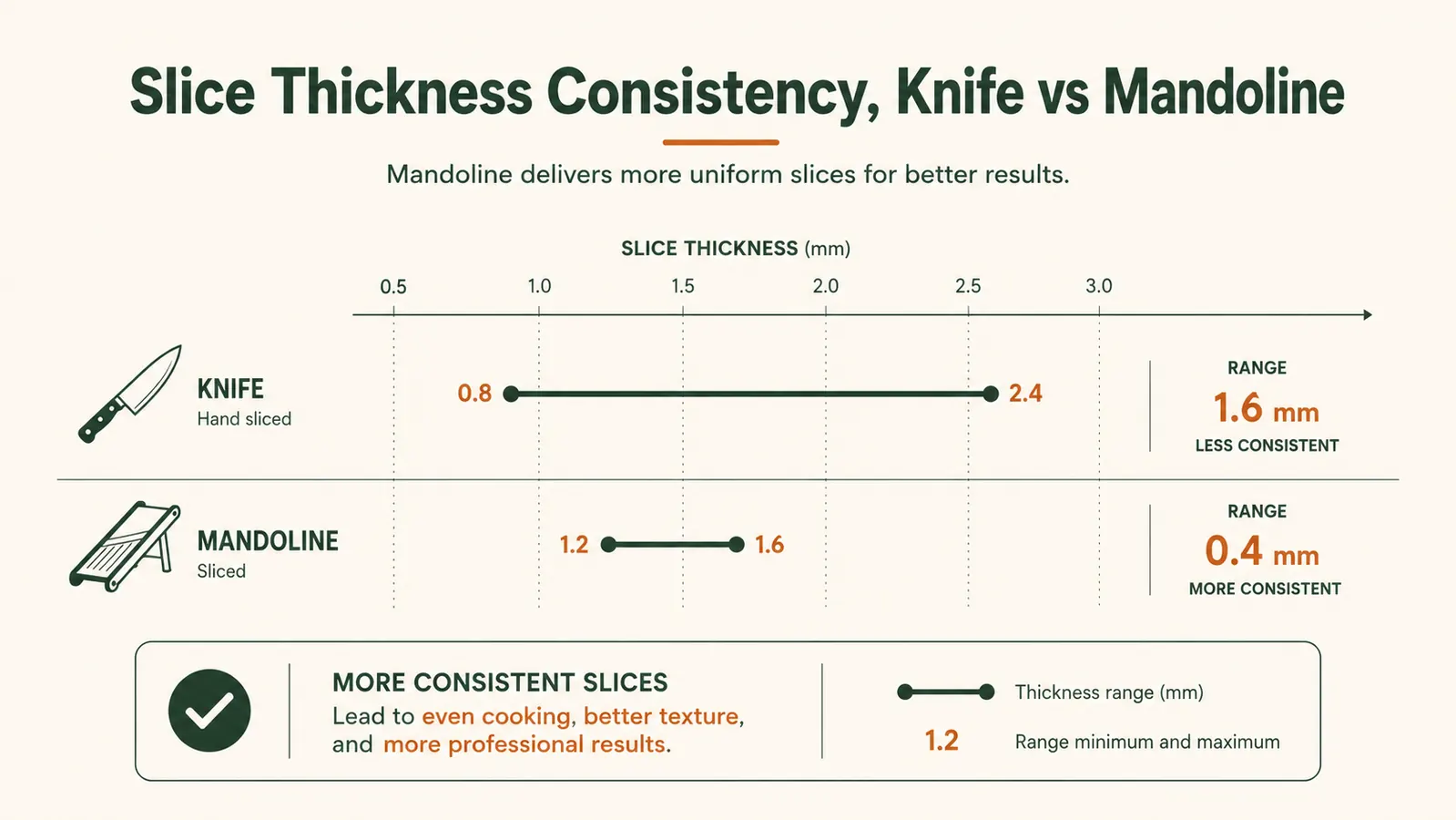
It hasn't stayed a one-recipe tool, either. I've used it for cucumber ribbons in a salad my daughter actually finished without complaint, for apple slices thin enough to fan out over a tart, and for shredded carrots using one of the julienne blades that came with it. I still keep my knife out for garlic and anything soft like tomatoes, since a Benriner mandoline isn't the tool for everything and I don't pretend it is.
I'll be honest about the part everyone warns you about. The blades are genuinely sharp, sharper than anything else in my kitchen, and I do not use it without the finger guard, ever, not even for one quick slice near the end of a potato. My kids aren't allowed near it. That respect is part of the deal with a tool this precise, and I'd rather tell you that plainly than pretend it's no different from a peeler.
What I'd Tell You If We Were Sitting at My Kitchen Table
If you asked me straight out whether this earns its spot in my small drawer, I'd say yes, without much hesitation, but I'd also tell you it's not for everyone. If you make gratin, or slaw, or anything where even slices actually change how the dish cooks, it solves a problem a knife genuinely can't solve no matter how good you get with it. If you're not making that kind of dish often, you might not need it. For me, it turned one dreaded dish into the one my family now asks me to bring, and Renata hasn't quietly fixed my gratin with a fork since. That's worth the drawer space, and it's worth the respect the blade demands every single time I use it.
Ready to Fix the One Dish That's Never Come Out Right?
If uneven slices have been quietly sabotaging your gratin, slaw, or salad for years, this is the small change that actually fixed it for me. Check today's price and see if it earns a spot in your drawer too.
Amazon Check Today's Price on Amazon →