

I bought the Benriner Mandoline Slicer in late March after one too many uneven batches of cucumber salad, the kind where half the slices are see-through and the other half are practically wedges. Four months later, it's gone through cucumbers, russet potatoes, fennel bulbs, red cabbage, and a memorable Thanksgiving-in-July attempt at gratin, and it's still the tool I reach for whenever I need slices that all cook at the same rate.
I want to be upfront about something before the rest of this review: I nicked my thumb in the first ten minutes of owning it, because I got cocky and skipped the hand guard on a small end piece of zucchini. It wasn't deep, but it was enough to make me a religious guard user for every session since. If you take one thing from this whole review, take that. This isn't a first-impressions post, it's four months of near-weekly use, including the mistakes.
The Quick Verdict
A genuinely sharp, consistent slicer for thin, even cuts, with real safety demands you cannot skip and a learning curve on thickness settings worth respecting.
Amazon Check Today's Price →See why home cooks keep this in the front of the drawer
Check today's price and current availability on Amazon before you decide.
Amazon Check Today's Price on Amazon →How I've Used It
My use of the Benriner has been ordinary weeknight and weekend cooking in a one-bedroom kitchen in Providence, nothing catering-scale. I've used it for cucumber and red onion in a quick-pickle rotation I've kept up most of the spring, potatoes for gratin and homemade chips, fennel shaved thin for salads, and cabbage for slaw when I'm feeding more than just myself. I have not used it on anything round and unstable like a whole tomato, because the shape makes it hard to keep steady against the blade, and soft produce like that tends to collapse rather than slice cleanly.
I've run it through roughly sixty sessions since March, by my rough count, mostly fifteen-to-twenty-minute stretches rather than marathon prep days. I hand-wash it every time, no exceptions, because the blade is sharp enough that I don't want it sitting in a sink full of other dishes where I might reach in without looking.
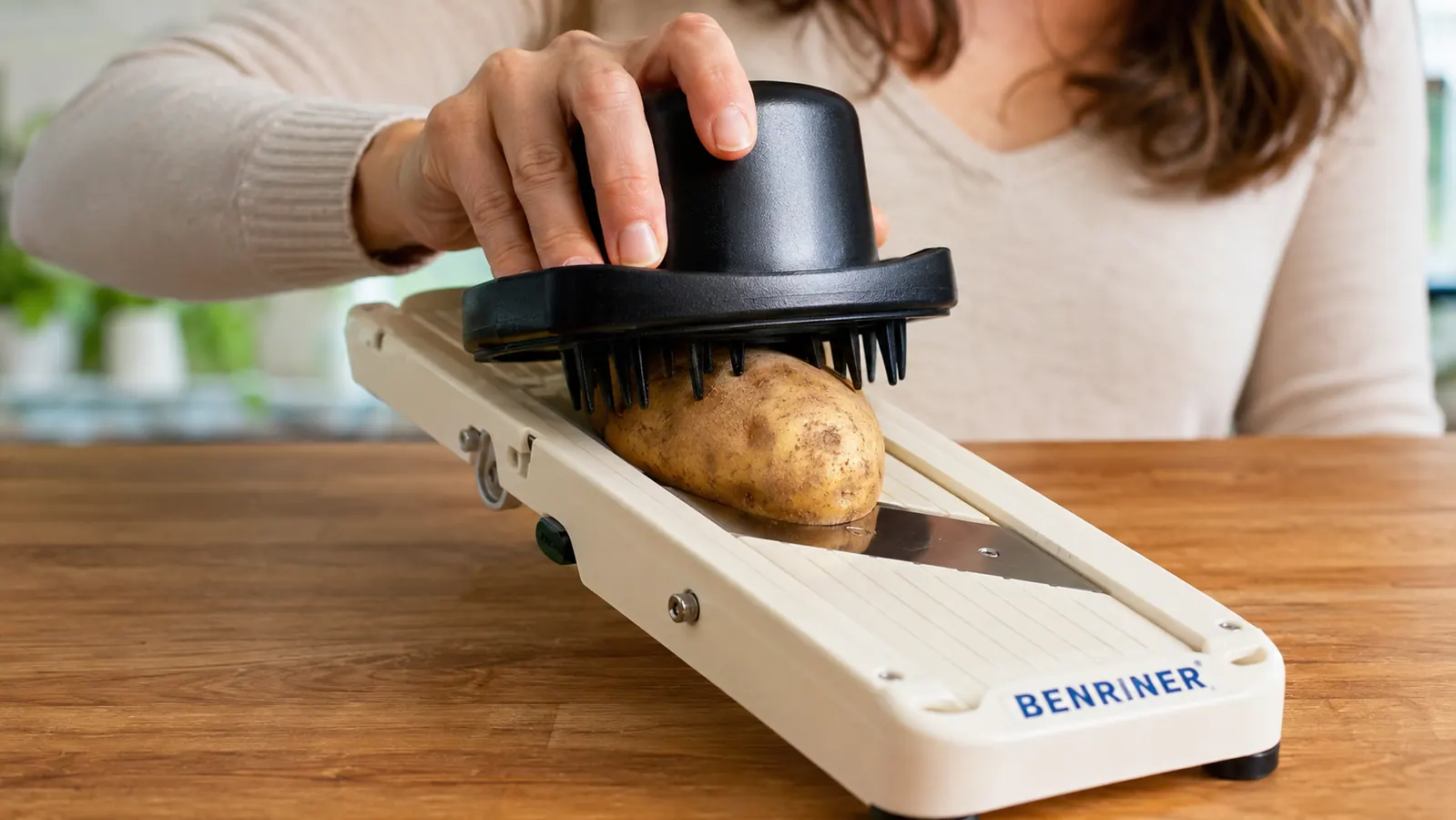
The single biggest change in how I use it now versus week one: I always use the hand guard, even for pieces that feel too small to be risky. That thumb nick taught me that the moment you think a piece is small enough to hold with bare fingers is exactly the moment you're closest to the blade. The guard has pins that grip the food, and once you get used to the motion, it's not much slower than holding food by hand, it's just non-negotiable.
By week two I'd settled into a routine: set the thickness dial, run three or four test slices at the far edge of whatever vegetable I'm using to confirm the setting before committing to the whole thing, then work through the rest in one steady, unhurried rhythm. Rushing is where mistakes happen with this tool, and I've made peace with it taking a few extra minutes to do it right.
I've owned my share of kitchen tools that promised precision and delivered inconsistency instead, so I went into this one wanting to be convinced. What's kept it in daily rotation instead of a drawer of regret is that the slices really do come out even, session after session, once you respect the process.
Blade Sharpness, Four Months In
The stainless blades are the whole reason to own this tool, and they've held up better than I expected. I was fully prepared for noticeable dulling by month three given how often I use it, some weeks two or three times, but a fresh cucumber still slices through with almost no resistance, no more pressure required than it took in March.
Where I have noticed a difference is on tougher, fibrous vegetables. A large russet potato with a thick skin took a bit more downward pressure in June than it did when the blade was brand new, though nothing dramatic, and nothing that's made me distrust the tool. Fennel and cabbage, which are softer and less fibrous, still slice exactly like they did the first week.
The set comes with multiple interchangeable blade inserts for different cut widths, including a julienne option. I've used the straight slicing blade probably 80 percent of the time, since that's what most of my recipes call for. The julienne blade gets pulled out maybe once every couple of weeks, usually for carrots in a quick slaw, and it needs a bit more deliberate, even pressure than the straight blade to avoid uneven strips.
I store the blade inserts I'm not using in their own small pouch, separate from my regular utensil drawer, mostly because I don't want to reach into a drawer and grab a blade edge by accident while looking for a spatula. That's added a small extra step to my kitchen organization, but it's a habit I'm glad I built early rather than after a close call.
Safety, and Why the Guard Isn't Optional
I want to spend real time on this because it's the part every review of a mandoline should take seriously and a lot of them gloss over. This tool is genuinely sharp, sharper than most kitchen knives I own, and it doesn't announce itself the way a knife's edge does when you look at it. The blade sits flush with the slicing surface, which means there's no visual cue reminding you to be careful the way there is with a knife blade catching light.
The hand guard that comes with it has small pins that grip whatever you're slicing, and it's designed so your fingers stay well above the blade line the entire time. I use it for everything now, cucumbers, potatoes, cabbage wedges, even pieces I could probably hold safely by hand. The extra few seconds it takes to spear food onto the guard's pins is nothing compared to what a slip against that blade would cost.
My one real safety habit, beyond the guard: I never let the mandoline sit unattended on a counter mid-use, especially with kids or a dog around my kitchen. I set it down flat, blade facing away from the counter edge, between slicing sessions rather than leaving it propped at an angle where someone reaching for something else could brush against it.
I also learned to stop when a vegetable gets down to its last inch or two. Once a cucumber or potato is small enough that the guard's pins can't grip it securely anymore, I switch to a knife for that last remnant rather than pushing my luck. It's a small amount of waste, honestly negligible, and it's a rule I don't bend regardless of how rushed I am on a given night.
Where It Genuinely Earns Its Space
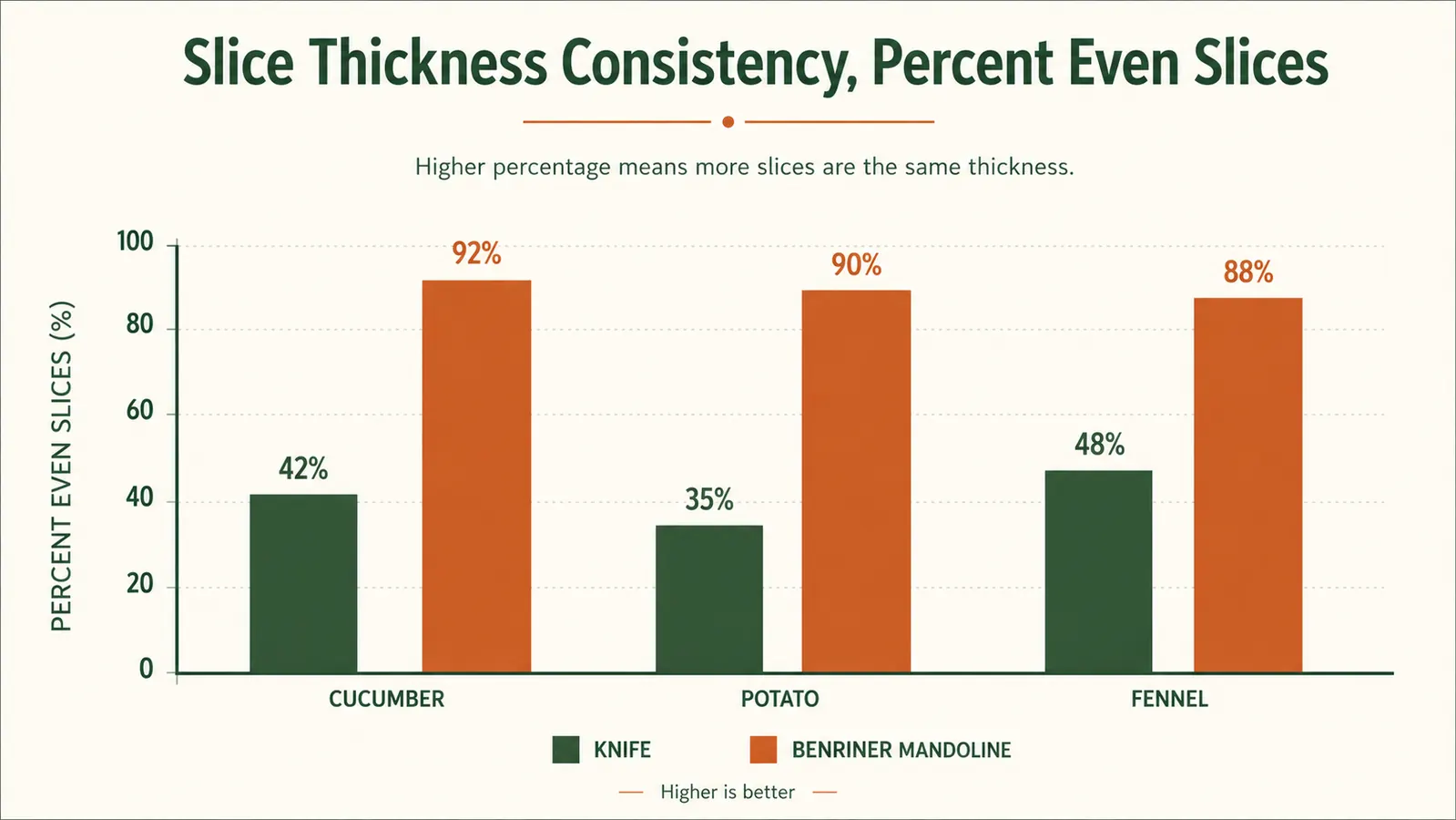
I timed myself slicing one English cucumber with a chef's knife, trying to get consistent thin rounds: just under four minutes, and the slices still varied noticeably in thickness when I lined them up afterward. The same cucumber through the Benriner, guard included, took about ninety seconds, and every slice was close enough in thickness that they cooked and pickled at the same rate.
That evenness matters more than raw speed for a lot of what I cook. Quick pickles taste better when every slice absorbs the brine at the same rate. Potato gratin layers cook more evenly when every slice is the same thickness, instead of some pieces going mushy while thicker ones are still firm. The mandoline solves a real problem a knife can't reliably solve for me, no matter how much I practice my knife skills.
Where it doesn't save meaningful time is small jobs, a single carrot or half an onion for a quick weeknight side. Setting the thickness dial, fitting the guard, and hand-washing the blade afterward takes longer than a few knife strokes for something that small. I've stopped reaching for it unless I'm slicing enough volume to make the setup worthwhile, usually a full vegetable or more.
Who's Borrowed Mine
My neighbor Priya borrowed mine in May for a dinner party where she wanted paper-thin fennel for a salad, and bought her own within the week once she saw how evenly it sliced compared to her knife attempt the time before. My cousin Marcus, who cooks almost every night but hates uneven potato chips coming out of the oven, was the most immediately converted person I've shown it to, since that was exactly the problem he'd been fighting for months.
My mom was more hesitant, mostly because of the blade, and I don't blame her. It wasn't until I showed her the guard in action, and made her use it herself on a test potato, that she warmed up to the idea of trying one at her own place. That hesitation is worth naming here rather than glossing over, because if sharp exposed blades make you nervous in general, that's a real, valid reaction to have before buying one of these.
Alternatives I Considered Before Buying
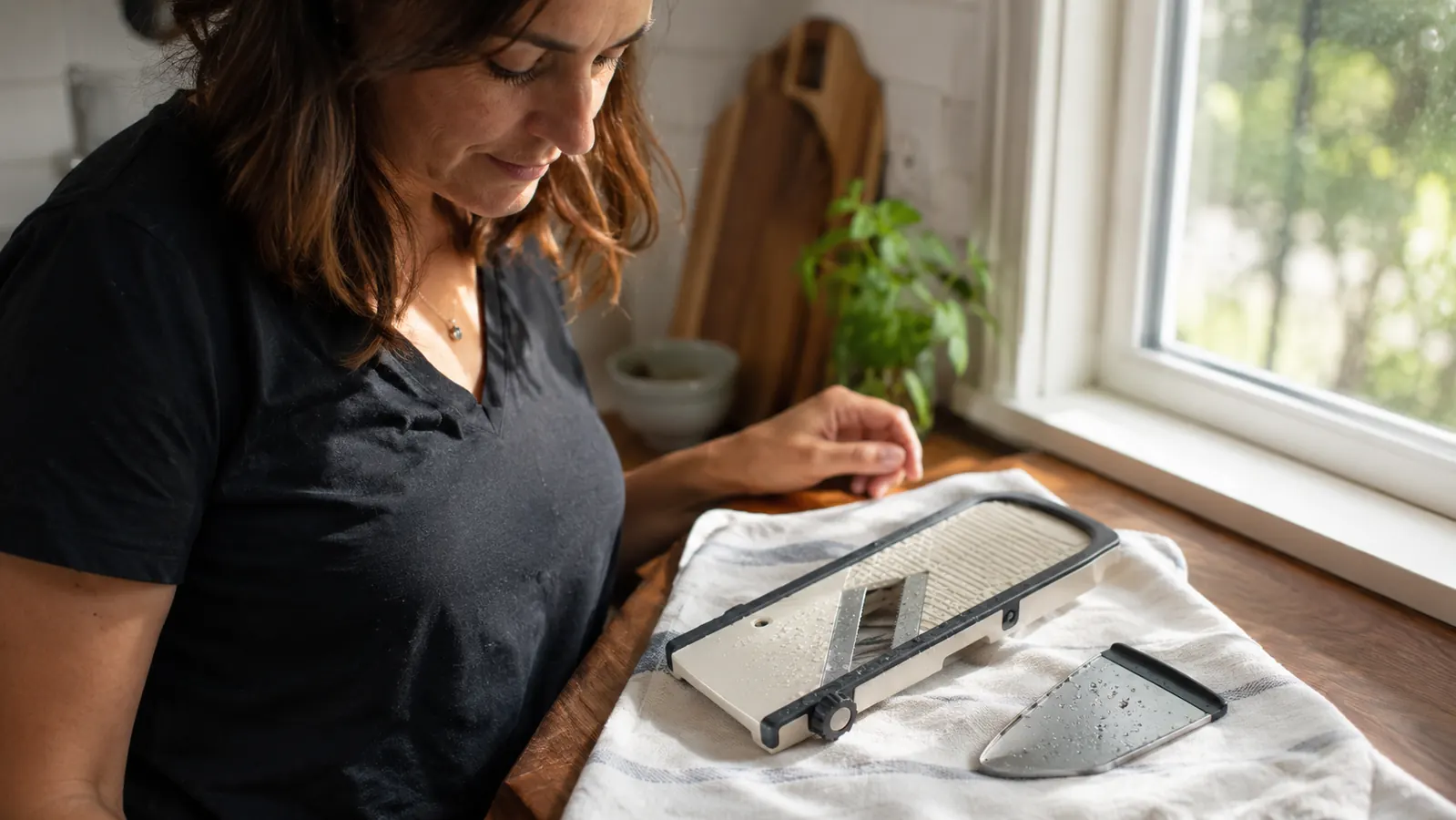
Before landing on the Benriner, I looked at a plastic V-slicer style mandoline at a local kitchen store, and a food processor slicing disc attachment I already owned but rarely used. The V-slicer felt flimsier in hand, and reviews I read mentioned the thickness dial slipping out of position mid-use, which sounded like exactly the kind of inconsistency I was trying to fix in the first place.
The food processor attachment I already had does slice faster for very large batches, cabbage for a big batch of slaw especially, but it's louder, needs full assembly and a full wash cycle for the whole processor bowl, and the slices came out thicker than I wanted for delicate work like fennel. The Benriner's small footprint and quick hand-wash cleanup ended up mattering more to me day-to-day than raw batch speed.
I also asked in a local cooking forum before buying, and the recurring worry people raised about mandolines generally was exactly the safety issue I mentioned above, not blade dulling or build quality. That's part of why I've been so deliberate about the guard habit throughout this review rather than treating it as a footnote.
What I Liked
- Blades stay sharp through months of near-weekly use on firm vegetables
- Produces genuinely even slice thickness that improves cooking consistency
- Compact enough to store flat in a drawer between uses
- Interchangeable blade inserts cover straight slices and julienne cuts
- Fast for volume work like quick pickles or gratin layers
Where It Falls Short
- Blade sits flush with no visual warning, real risk without the guard
- Guard use adds a few seconds per piece that some will find tedious
- Struggles with round, unstable produce like whole tomatoes
- Not faster than a knife for single small items
- Requires hand-washing rather than tossing in the dishwasher
It's not the tool that's dangerous. It's skipping the guard because a piece looks too small to matter.
Who This Is For
If you make quick pickles, gratins, slaws, or salads that depend on thin, even slices, and you're willing to use the hand guard every single time without exception, this earns its space in a real kitchen. It's also a strong fit if you've been frustrated by uneven knife cuts affecting how food cooks, since that consistency is the entire reason to own one.
Who Should Skip It
If exposed sharp blades make you genuinely nervous, or you know you'd be tempted to skip the guard on smaller pieces, it's worth being honest with yourself before buying one. And if most of your slicing is small, occasional jobs rather than volume work, a good knife will likely serve you just as well without the extra setup and cleanup.
Ready for slices that actually match, every single time?
See current pricing and availability for the Benriner Mandoline Slicer on Amazon.
Amazon Check Today's Price on Amazon →