
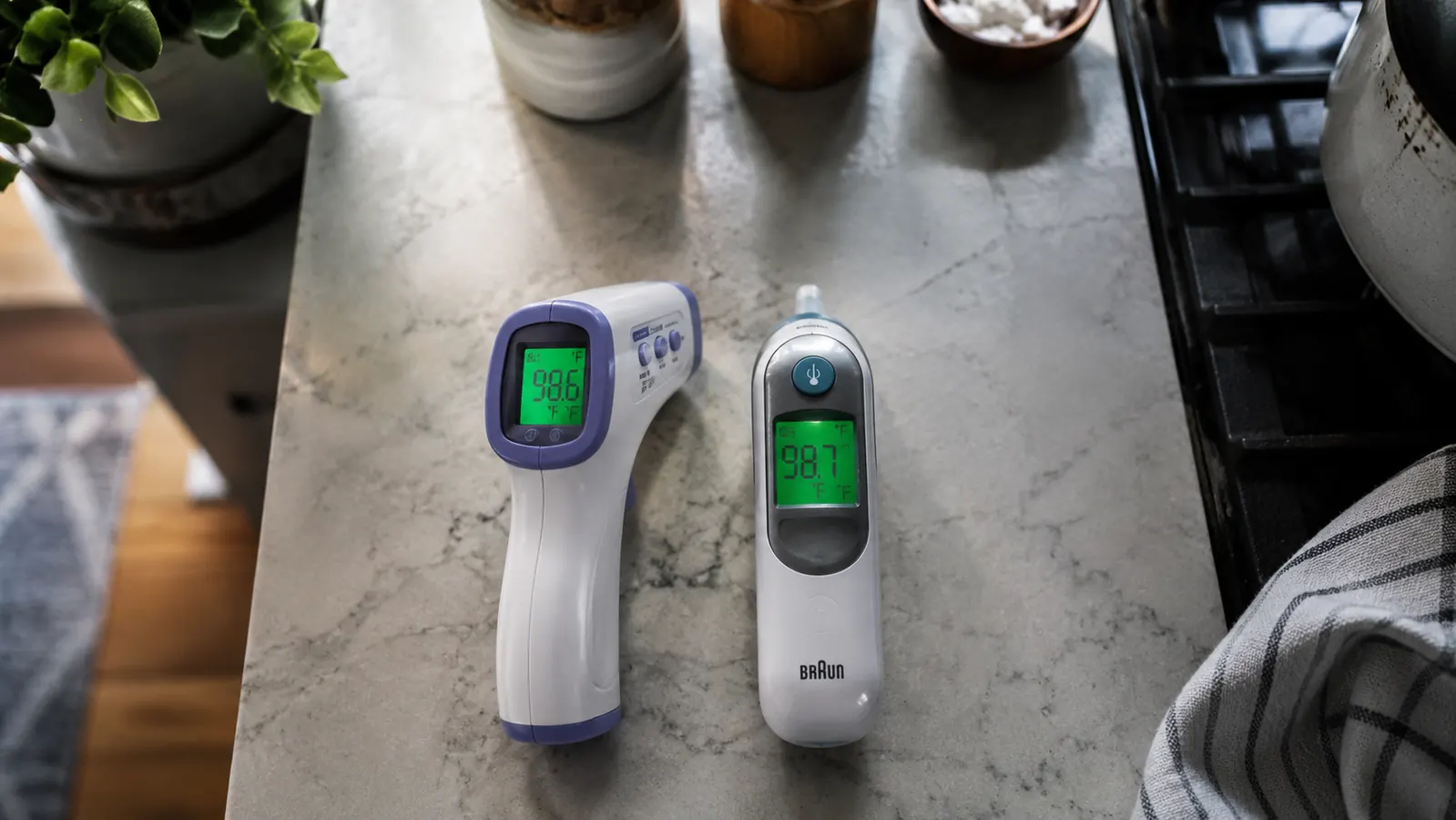
I own both of these. A TempPro TP17 dual probe thermometer lives in my utensil drawer next to the stove, and a small instant-read thermometer rides in my apron pocket most nights. If you're trying to decide whether you need the dual probe leave-in style or whether a basic instant-read is enough, the honest answer depends on what you're actually cooking on a Tuesday versus what you're cooking for eight people on a Sunday.
I've used the TempPro TP17 through two Thanksgivings, a dozen smoked pork shoulders, and more roast chickens than I can count in my small city kitchen. I've used a plain instant-read for everything else, searing scallops, checking a pan of chicken thighs, testing a pot of caramel. They are not really competing for the same job, and once you see where each one earns its keep, the choice gets a lot easier.
I'm clutter-averse in a small kitchen, so nothing gets a permanent spot in my drawer unless it actually pulls its weight. Both of these tools have earned theirs, but for different reasons, and that's really the point of this comparison. This isn't a case of one winning and one going in the donate pile. It's a case of knowing which one to reach for before you start cooking, not halfway through when the oven timer is already counting down.
The Short Answer
If you cook things low and slow, whole birds, roasts, ribs, brisket, or anything on a smoker or in an oven for more than 20 minutes, get the TempPro TP17. The dual probe setup lets you monitor the meat and the ambient oven or smoker temperature at the same time without opening the door, which is the single biggest upgrade over guessing. If nearly everything you cook is quick, a pan-seared chop, a burger on the stovetop, a piece of fish, a basic instant-read thermometer is faster to use and cheaper to replace if you lose it in a drawer, which I have done twice.
| Spec | TempPro TP17 (Dual Probe) | Instant-Read Thermometer |
|---|---|---|
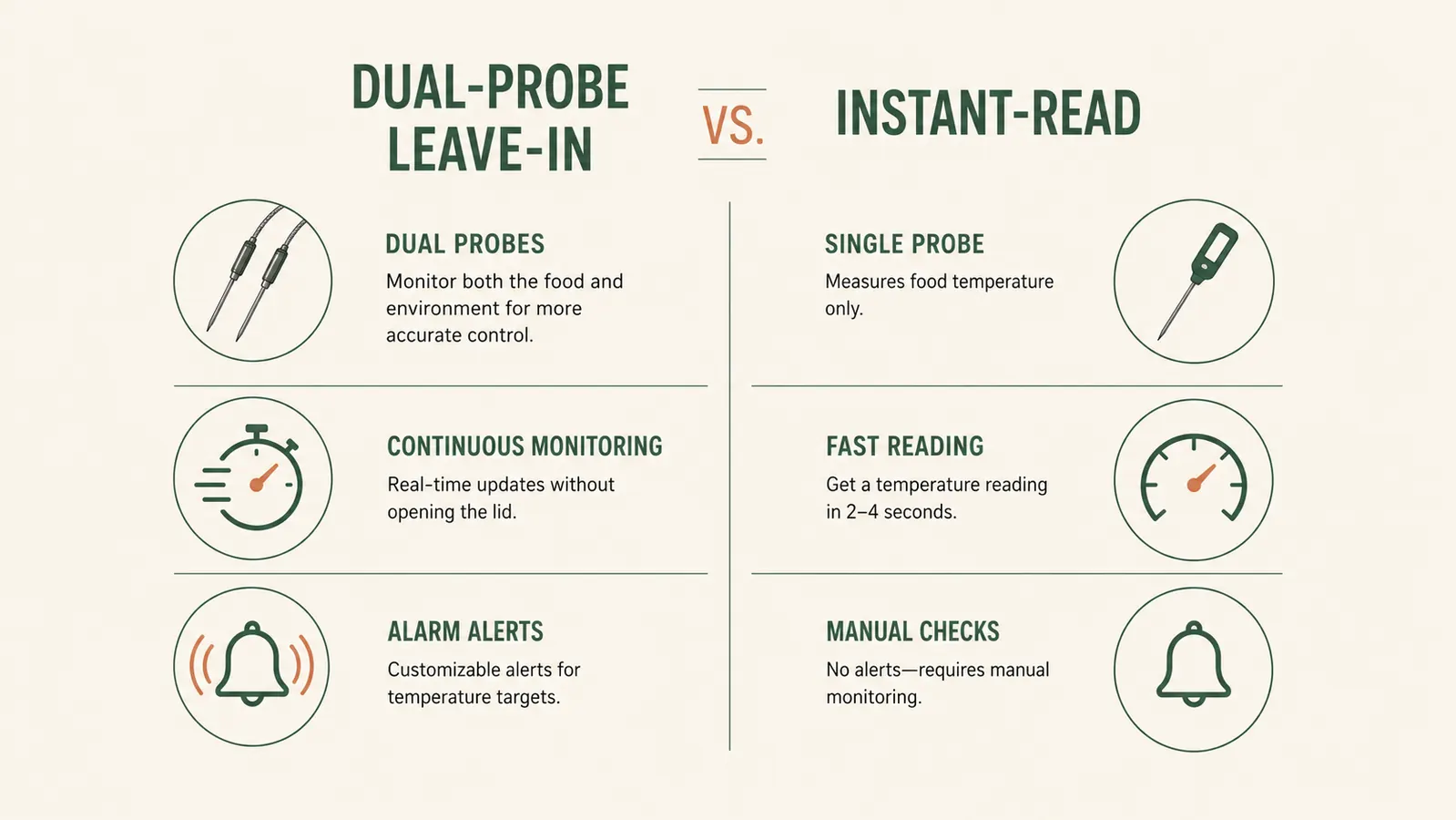
| Probe Count | Two probes: one for meat, one for ambient oven/smoker air | One probe, single reading at a time |
| Read Style | Leave-in, continuous monitoring while it cooks | Pull and check, one reading then it's put away |
| Speed of a Single Reading | About 6 to 8 seconds to settle | About 2 to 3 seconds, built for speed |
| Alarms and Timer | Programmable high and low temp alarms plus a countdown timer | No alarms, no timer, just a number on a screen |
| Display | Large backlit LCD, easy to read across the kitchen or in a dark backyard | Small screen, usually no backlight |
| Portability | Corded probes and a base unit, meant to stay put on the counter | Slips into a drawer, apron pocket, or knife roll |
| Best Use Case | Whole roasts, smoked meats, long oven bakes, holiday turkeys | Quick sears, thin cuts, candy and dough temps, spot checks |
How I Tested Both Side by Side
I didn't just compare these on paper. Over the course of a month I cooked the same handful of meals twice, once reaching for the TempPro TP17 and once reaching for the instant-read, so I could actually feel the difference in how the cooking itself went, not just how the specs read on a box. A whole chicken, a pork shoulder on the smoker, a batch of seared chicken thighs, and a pan of scallops all got the same treatment.
The results were about what you'd expect once you actually live with both tools instead of just reading a comparison chart. On the long cooks, the TempPro's alarm meant I stopped hovering near the oven and could actually sit down with my family. On the quick cooks, the instant-read was in and out of the pan before the TempPro's base unit would have even finished booting up. Neither one felt wrong for its job. Using the wrong one for the wrong job felt clunky both times.
I also timed how long it took to get set up for each cook. The instant-read wins that race every time, it's out of the drawer and reading a temperature in under 10 seconds. The TempPro takes a minute or two longer up front, mostly clipping the second probe into place and setting the alarm range, but that setup time buys back hours of not having to check on anything, which is a trade I'll make every time for a long roast.
Where the TempPro TP17 Wins
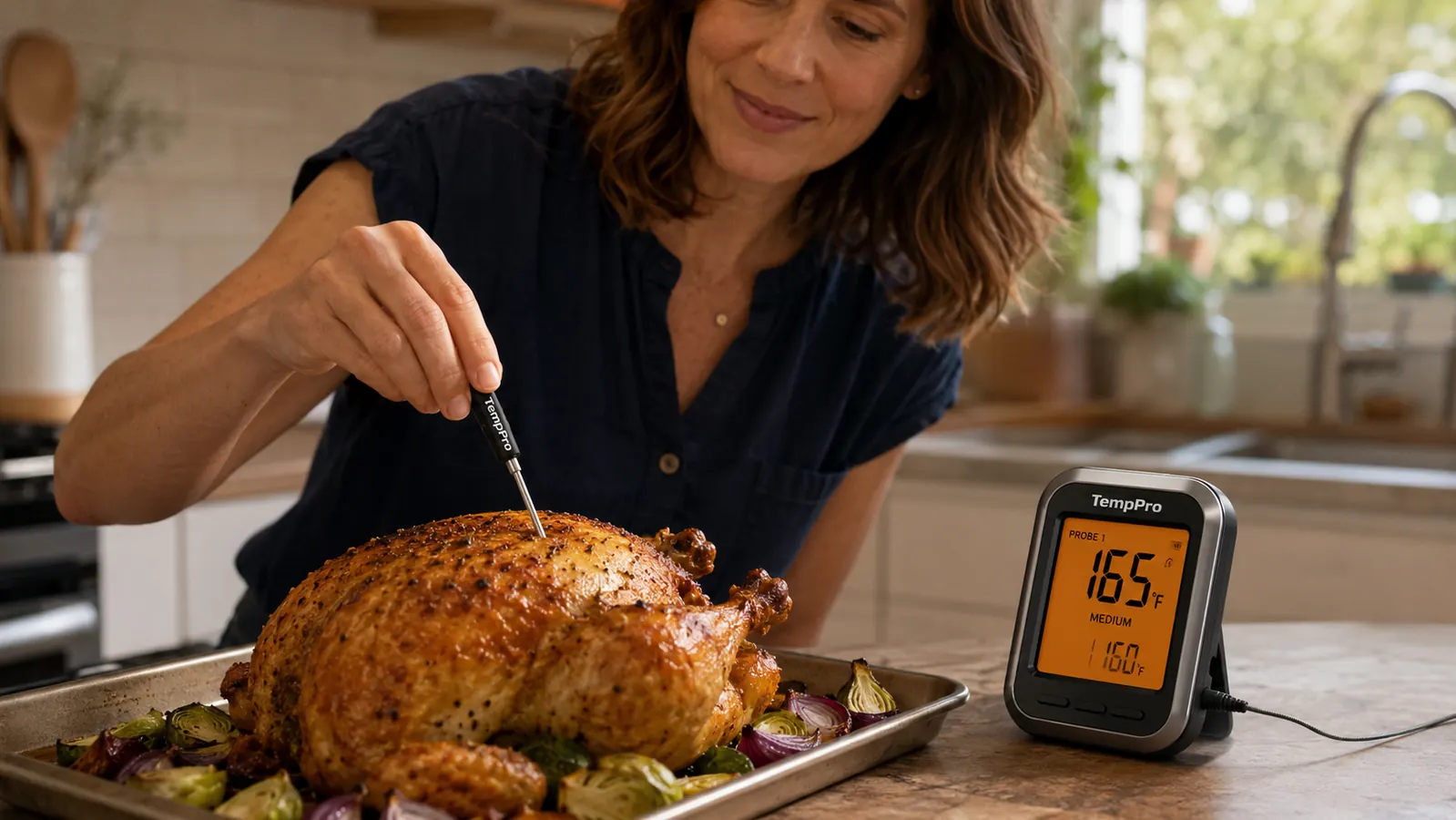
The dual probe is the whole reason to own the TempPro TP17. On a 14-pound turkey, I put the meat probe in the thickest part of the thigh and clip the second probe near the breast, then set my alarm range and walk away. I'm not opening the oven every 20 minutes to check, which used to dry out my birds two years running before I started doing this. The oven door stays shut, the heat stays even, and the alarm tells me the second either probe crosses into range.
The backlit display matters more than I expected it would. When I'm running a smoker in my building's shared courtyard after dark, being able to read the temperature without pulling out my phone flashlight is a small thing that I now consider non-negotiable. The countdown timer function also means I stop relying on my oven's built-in timer, which I've learned to distrust after a few burnt-edge disasters.
The other place it wins is consistency across long cooks. Pork shoulder on the smoker can run six to eight hours, and checking it with an instant-read every hour means opening the smoker repeatedly, which drops the internal temperature and adds time. With the TempPro TP17 leave-in setup, the probe stays put the entire cook and I get a real-time readout without touching the lid. For anything that takes longer than the time it takes to sear a chop, this is the tool that actually changes the outcome.
There's also a mental relief factor that's hard to put a number on. Once I stopped needing to check on a roast every 20 minutes, I got a lot more comfortable stepping away to fold laundry or help with homework while dinner cooked itself in the background. That's not a spec sheet feature, but it's the actual reason the TempPro earned a permanent spot in my drawer instead of getting used twice and forgotten.
Where the Instant-Read Wins
For quick cooking, the TempPro TP17 is honestly overkill. Searing a piece of chicken breast in a skillet takes maybe 10 minutes total, and fumbling with two probes and a base unit slows down a process that should be fast. My instant-read gives me a reading in about two seconds, I check it, I'm done, no cords, no base unit sitting on the counter taking up space I don't have in a small kitchen.
It's also the better tool when you're checking multiple things in quick succession, like testing three different chicken thighs in a sheet pan dinner or checking the temperature of oil for frying. You can't leave a probe in oil the way you can leave one in a roast, so the pull-and-check style is simply the right tool for that job. And because it's small and cordless, it survives being tossed in a drawer with the rest of my gadgets in a way the TempPro's cords and base unit don't love.
There's also a cost-to-replace argument here. An instant-read is a simpler tool with fewer parts to fail, and if I lose track of it in a junk drawer for a few months, replacing it isn't a big decision. That's not true of a dual probe system with a base unit, two cords, and alarm settings. Simplicity has real value when the cooking task itself is simple.
Roasting something bigger than a chicken breast this week? Don't open the oven door to guess.
The TempPro TP17's dual probe setup is the difference between checking your turkey once with an alarm and opening the oven six times and drying it out. See today's price and current availability on Amazon.
Amazon Check Today's Price on Amazon →
How I Actually Use Both in My Kitchen
In practice, I don't pick one and retire the other. The TempPro TP17 comes out for anything that goes in the oven or on the smoker for more than 20 minutes: whole chickens, pork shoulder, meatloaf, holiday turkeys, the occasional beef roast when it's on sale. The instant-read stays in my apron pocket for weeknight cooking: pan-seared salmon, chicken thighs, burgers, and checking whether a pot of caramel has hit soft-ball stage.
The one habit that took me a while to build was actually using the alarm function on the TempPro instead of just eyeballing the display every so often. Once I started setting a real target temperature and letting the alarm do the watching, I stopped losing track of what was in the oven while I was doing something else, which is basically the entire point of a leave-in probe. If you're going to spend money on the dual probe version, use the alarms, that's where the value actually shows up.
Who Should Buy Which
Get the TempPro TP17 if you regularly cook whole birds, roasts, ribs, or anything on a smoker, or if you host holiday dinners where a dried-out turkey is a real risk. The dual probe and alarm system solve a specific problem, walking away from a long cook without babysitting it, and no instant-read thermometer can do that no matter how fast its reading is.
Stick with a basic instant-read thermometer if your cooking is mostly quick weeknight meals, stovetop work, or baking where you're checking dough or sugar temperatures rather than monitoring a roast over hours. It's cheaper to replace, faster for a single reading, and small enough to live in a drawer without taking up space you don't have. Plenty of home cooks are genuinely better served by the simpler tool, and there's no shame in skipping the dual probe if you don't cook the kind of meals that need it.
If I had to keep only one, it would depend entirely on what's actually in my weekly rotation, and for me that's roasts, smoked meats, and holiday meals often enough that the TempPro earns its drawer space every time. If your kitchen leans more toward quick weeknight cooking, an instant-read alone might genuinely be all you need, and that's a perfectly reasonable place to land.
My honest suggestion for most home cooks who host even occasionally is to own both, the way I do. They cost different amounts, they solve different problems, and neither one is a waste of drawer space once you know which meal calls for which tool.
If your next big cook is a roast, a bird, or anything on the smoker, this is the one that earns drawer space.
The TempPro TP17 dual probe thermometer handles the long cooks where guessing costs you a dried-out dinner. Check current price and availability on Amazon before your next roast.
Amazon See Current Price on Amazon →