

For three years, I apologized for chicken. Not steak, not fish, chicken. Every time I roasted a whole bird or pan seared a few breasts for my husband and our two teenagers, somebody at the table would say some version of "it's fine" in that tone that means it is not fine. Dry, chalky, the kind of dinner you choke down with extra gravy just to get it past your throat.
I have a small kitchen in a rowhouse with maybe fourteen inches of counter space that isn't already holding something else, so I've never been the type to buy a gadget on a whim. Every tool in my drawer has to earn its spot. But after the third Thanksgiving in a row where my sister in law quietly cut her turkey into smaller pieces to hide how dry it was, I finally ordered a TempPro TP17 dual probe thermometer, the one that's labeled previously ThermoPro on the listing. I'd looked at probe thermometers before and talked myself out of it more than once, telling myself a good cook shouldn't need a machine to tell her when food is done. That pride cost me a lot of dry chicken.
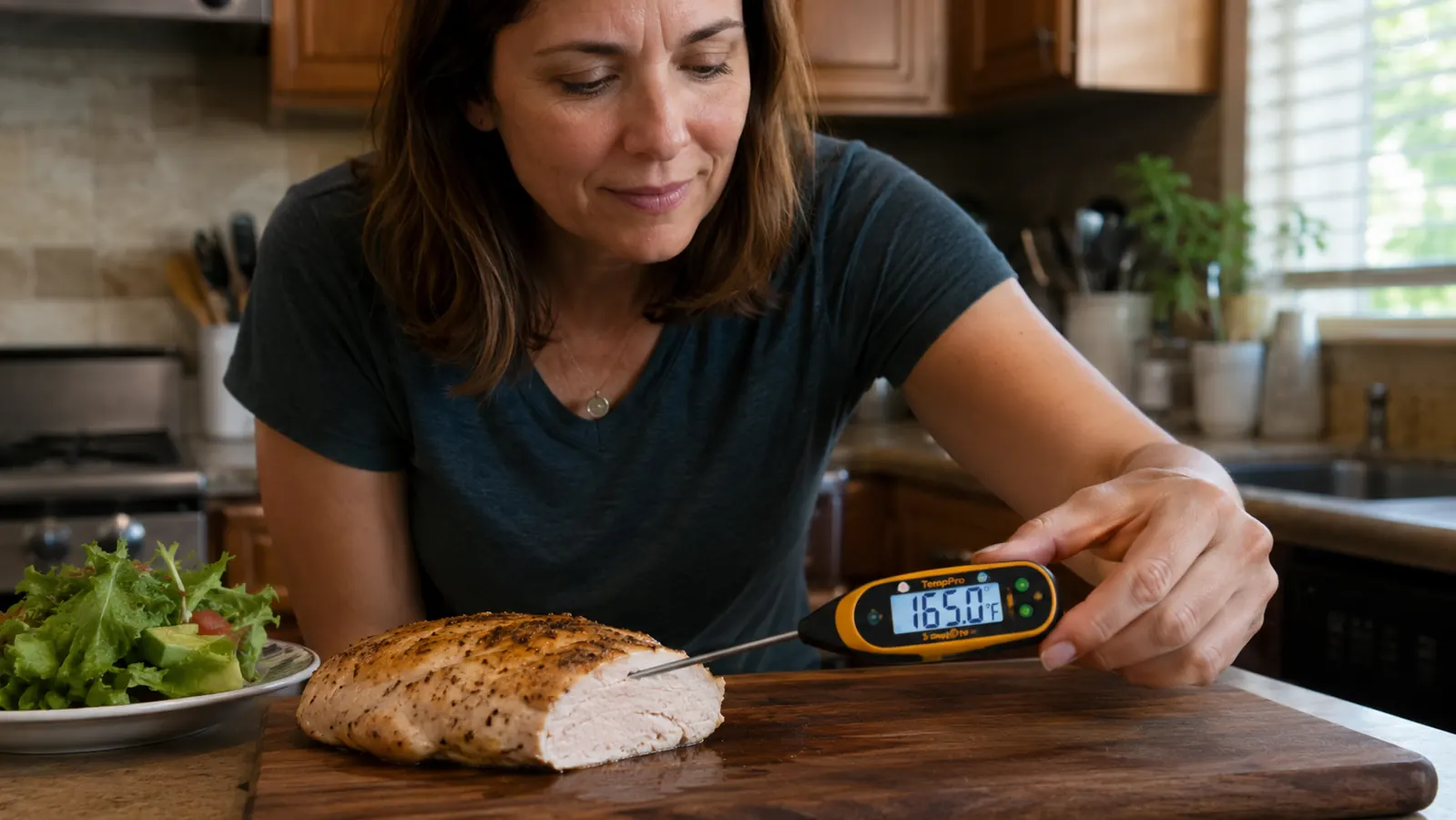
I want to be honest about why it took me so long. I'd always assumed the poking-and-cutting method was good enough. Cut a slit in the chicken, check if the juices run clear, guess. What I didn't understand until I actually started measuring is that clear juices and safe internal temperature are not the same thing, and by the time chicken looks done by the cut-and-peek method, it's usually already ten or fifteen degrees past where it should have come off the heat.
The first night I used the TempPro, I made the same pan seared chicken breasts I'd made a hundred times before, nothing fancy, just olive oil, salt, pepper, and a hot cast iron skillet. I clipped the probe wire so it wouldn't dangle into the burner, set the alarm for 165, and did the dishes while I waited instead of hovering over the pan flipping pieces every ninety seconds out of nerves.
The alarm went off at 165 and I pulled the chicken. It looked underdone to my eye. It was not underdone. It was the first juicy chicken breast I had made in three years.
Stop guessing with a knife and a prayer
The TempPro TP17 gives you a real number instead of a guess, dual probes so you can monitor two things at once, and an alarm that tells you the second it's ready. Check today's price on Amazon.
Amazon Check Today's Price on Amazon →
My husband didn't say anything the first time. He just went back for a second piece, which in eleven years of marriage I have learned is the only review that matters. My younger daughter, who is fourteen and has opinions about everything, actually asked if we could have chicken again later that week. That had not happened since she was in elementary school.
What surprised me most wasn't the chicken, honestly. It was the pork chops. I'd always cooked pork the way my mother did, well past any hint of pink, because that's what I was taught was safe. Turns out 145 with a short rest is the actual target, and the difference between a pork chop pulled at 145 versus one pulled at 165 the old fashioned way is not subtle. It's the difference between something you'd order at a restaurant and something you eat because it's dinner and dinner has to happen.
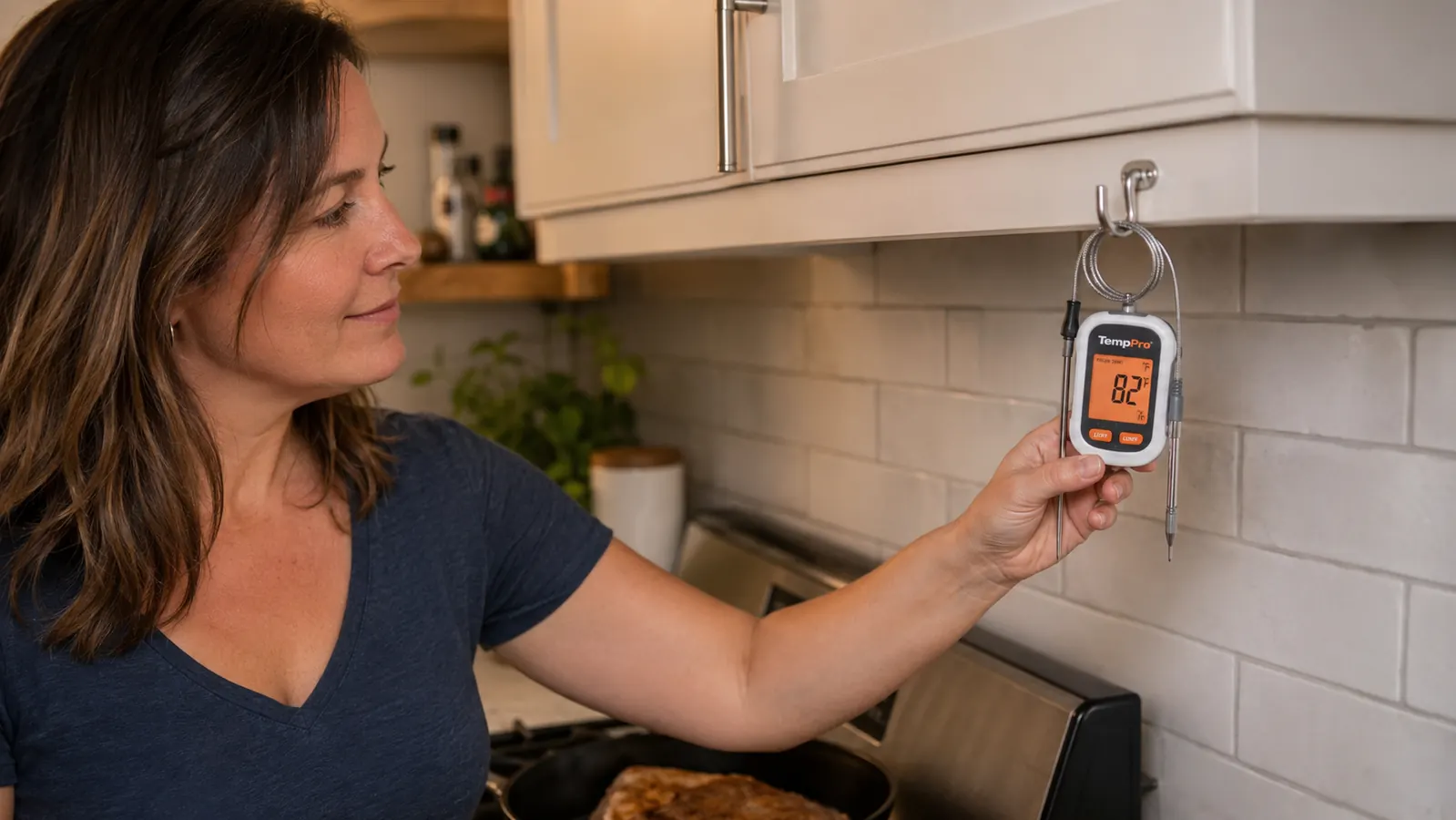
The dual probe part matters more than I expected too. On a Sunday when I'm doing a roast and a side of chicken thighs at the same time, I run both probes and just glance at the display instead of opening the oven six times and losing heat every time I do. The display is a big backlit LCD, easy to read from across the kitchen, which matters when your reading glasses are somewhere in the junk drawer, as mine always are.
It's not a perfect tool. The probe wires are stiff when they're new and take a few uses to relax enough to sit flat against the oven door. The alarm beep is loud enough that it woke my husband from a couch nap once, which he brought up for a solid month. And it runs on a battery that I now keep a spare of in the drawer, because there is nothing worse than reaching for it mid cook and finding it dead. None of that has made me put the TempPro back in the box, though. I just keep the spare battery close and warn people before I test the alarm.
The chicken problem doesn't fix itself
If dry chicken and overcooked pork have been a running joke in your house too, the fix is a lot smaller than you'd think. See current availability and price on Amazon.
Amazon Check Today's Price on Amazon →What I'd Tell You If We Were Sitting at My Kitchen Table
If you asked me over coffee whether this thing is worth the space it takes up, here's what I'd actually say. I'm not going to tell you it changed my life, because it's a TempPro thermometer, not a life coach. But it changed dinner, and dinner happens every single night in this house, so the math works out in its favor pretty fast. It hangs on a hook by my stove now, not buried in a drawer, which for me is the real test of whether a kitchen tool earns its keep. If you've been quietly apologizing for your chicken the way I was, this is a cheap, unglamorous fix for a problem that's been embarrassing you for longer than it should have.